QUINTA DE CIMA DE OLIVEIRA
Quinta de Cima de Oliveira is a property consisting of a manor house with chapel and cultivated land, in Oliveira de Santa Maria, in the municipality of Vila Nova de Famalicão.
In its current configuration, the house was built in 1769, possibly as an extension or improvement of an existing house, being contemporary with the chapel, which is attached to it and which dates from 1768.
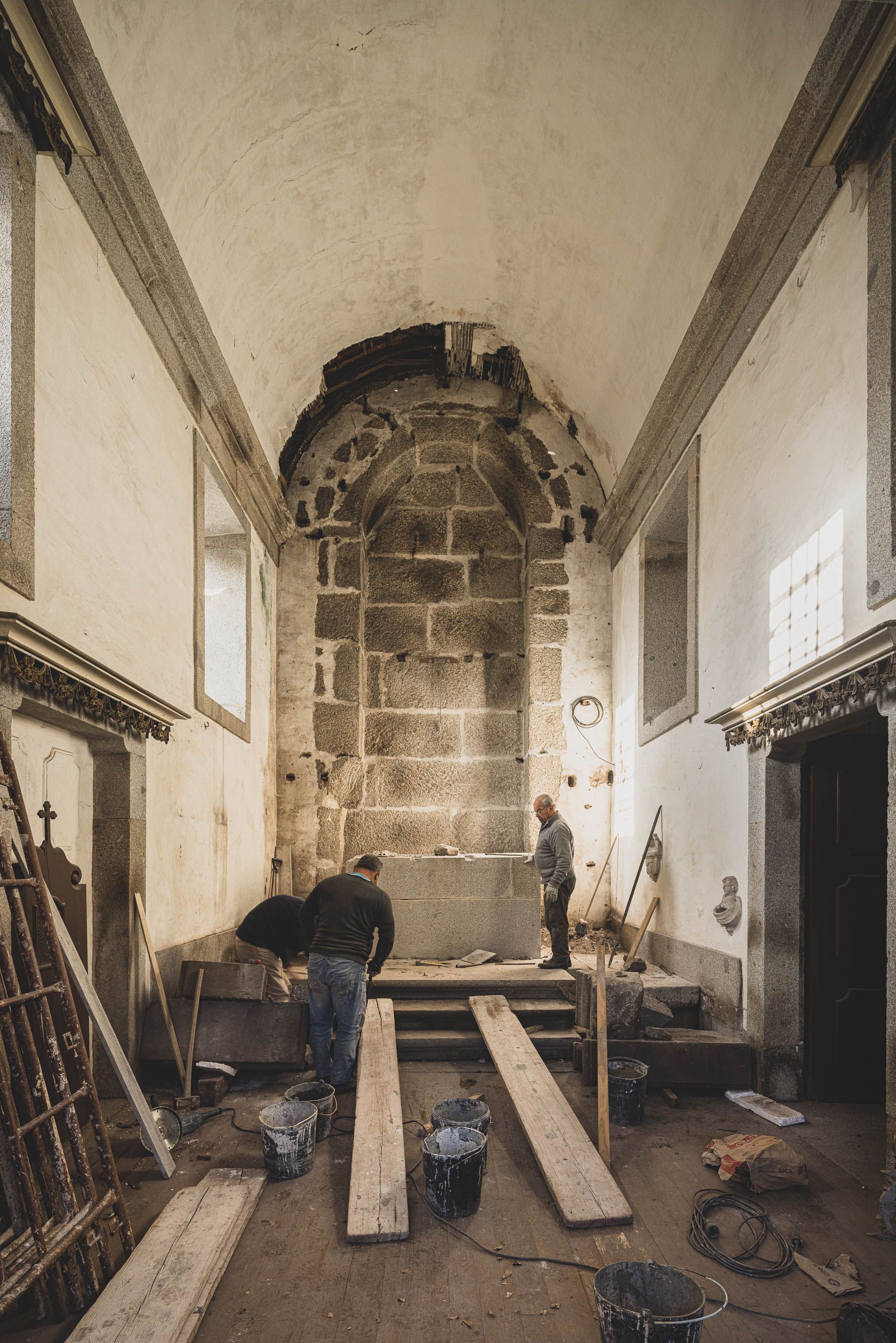
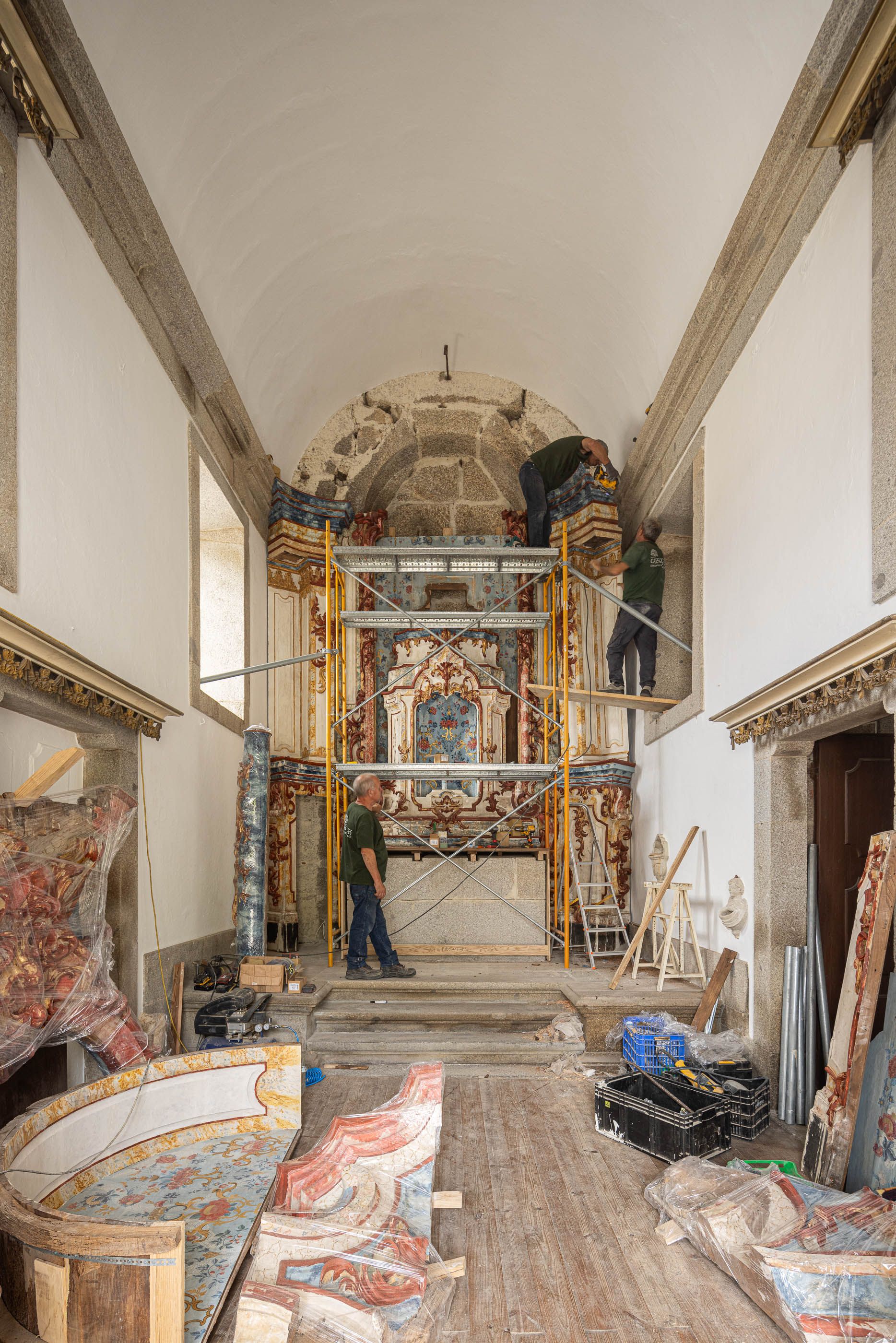
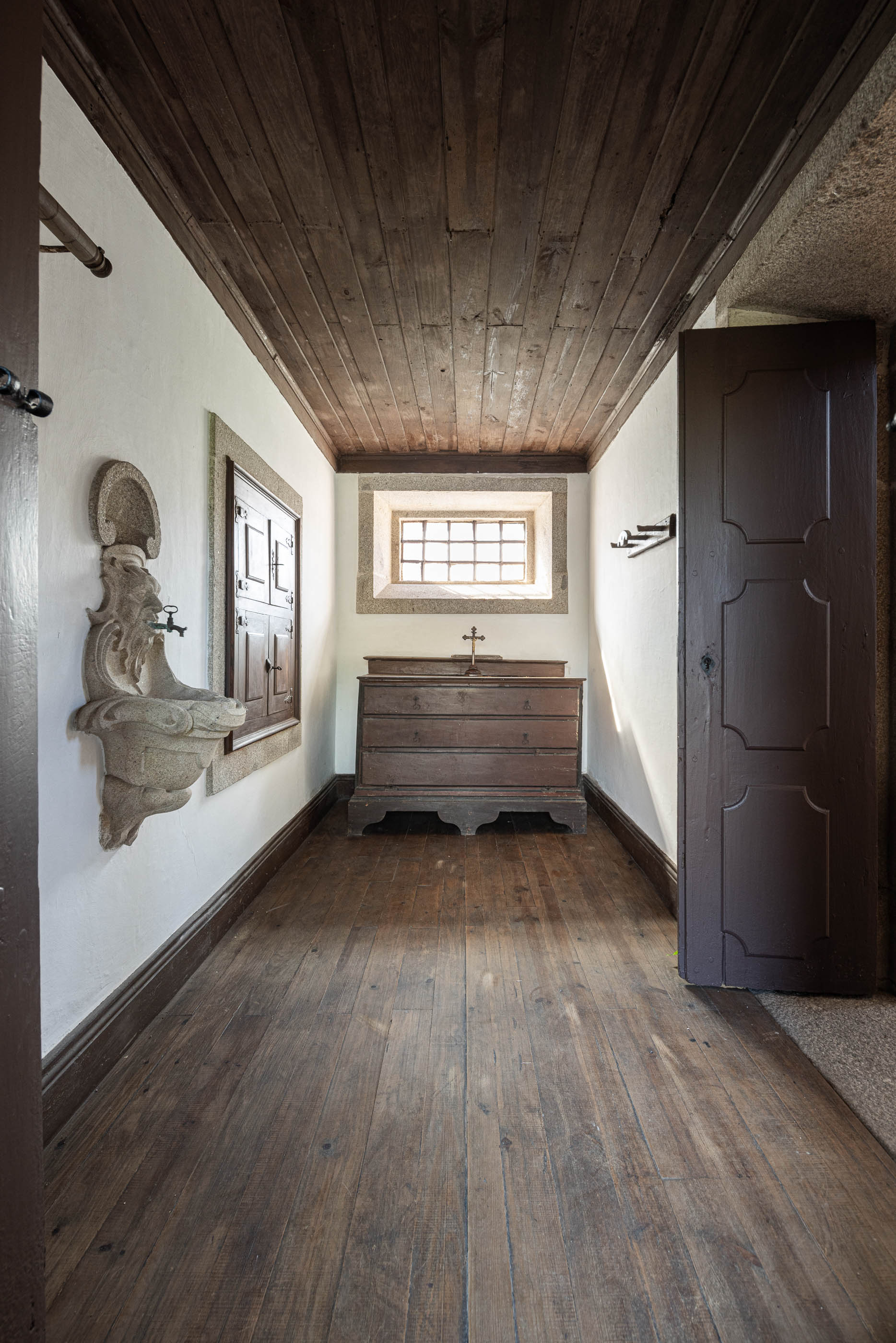
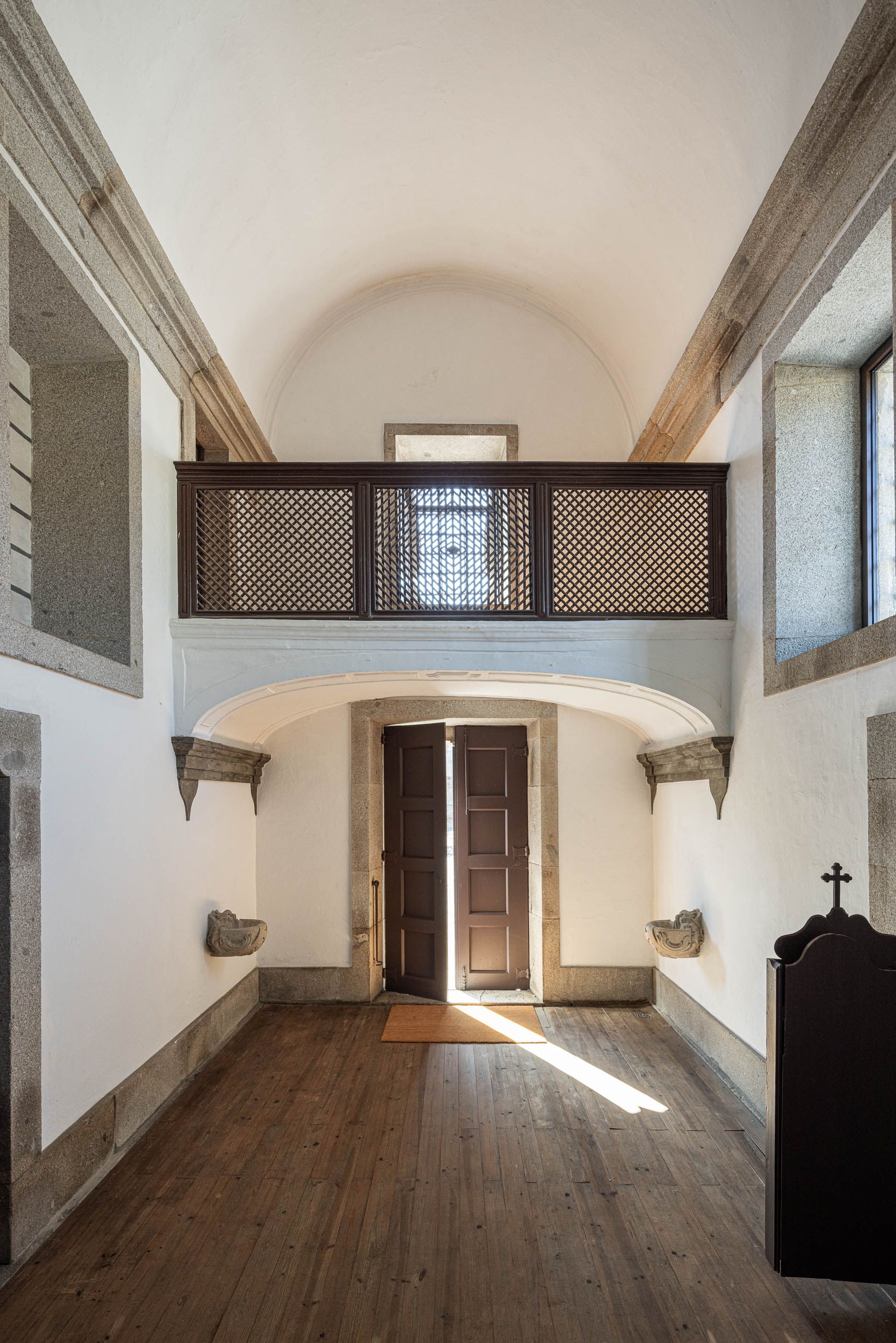
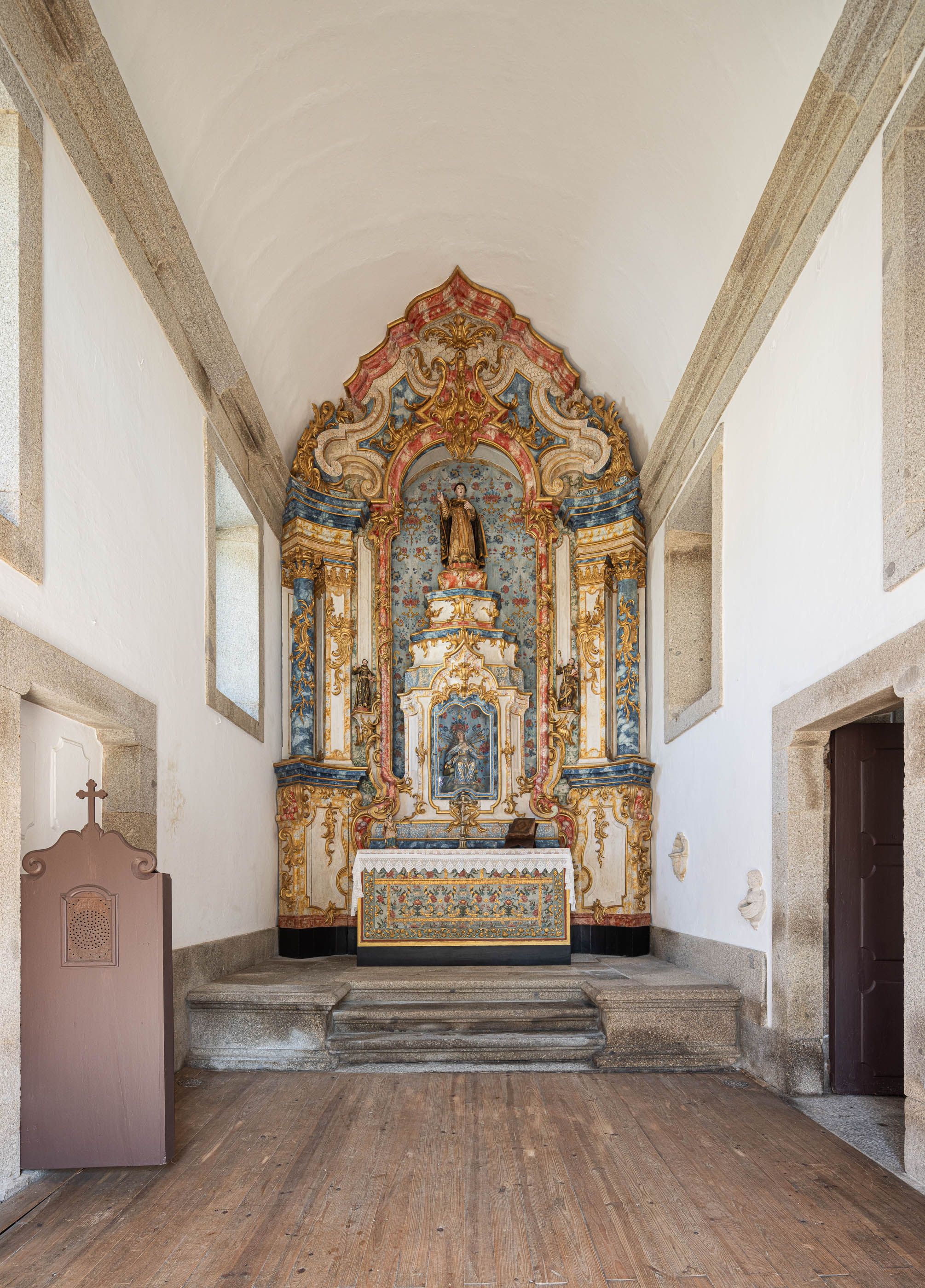
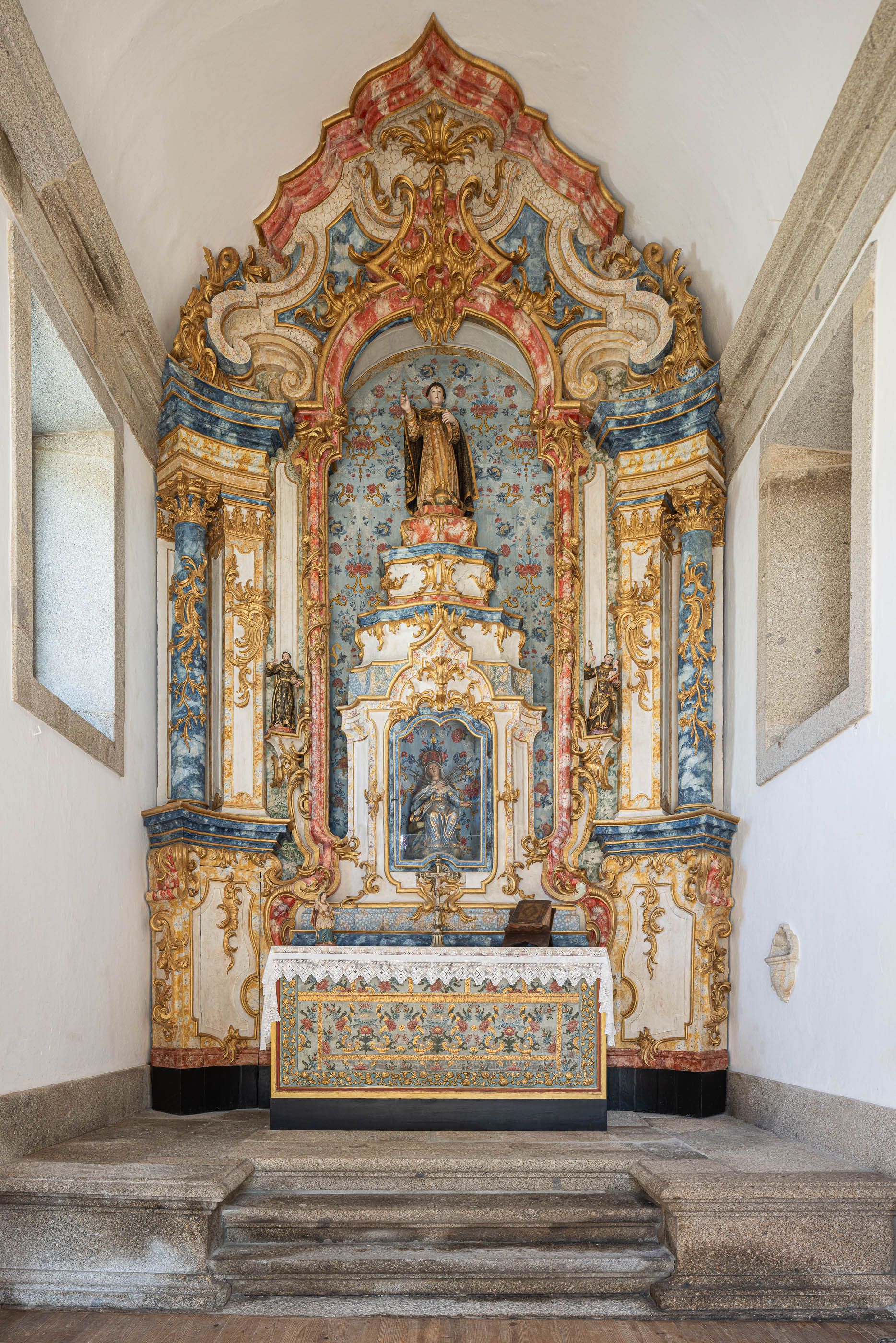
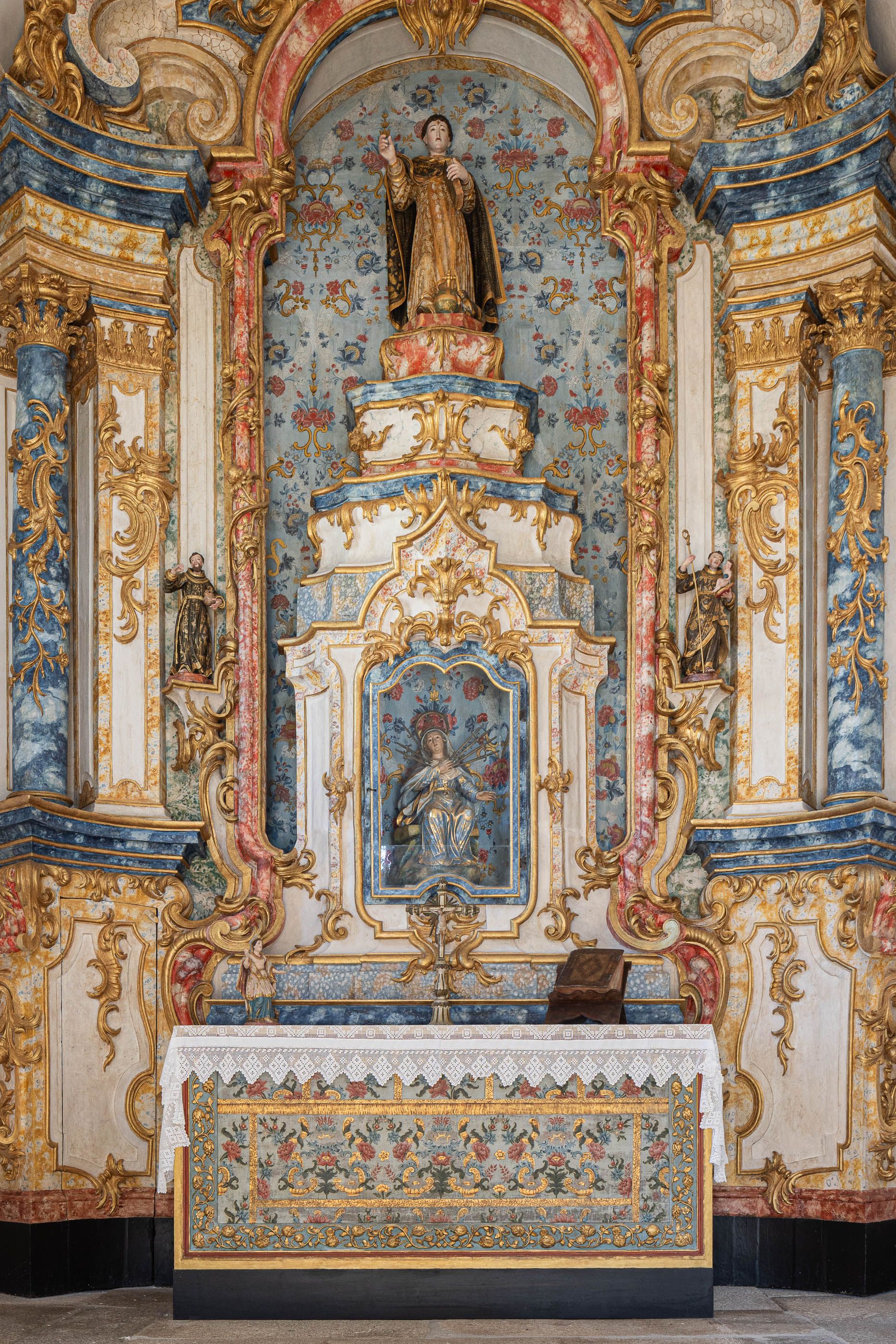
The chapel has a rococo façade, topped by a religious coat of arms and a bell tower with a bell. Its interior has the nave, with the rammed earth ceiling creating a barrel vault, the presbytery and, on the side, the sacristy, already within the limits of the house. It also has a high choir above the main door of the church, with exclusive access from the house, and a main altarpiece with a concave plan in gilded and polychromy, also of late Baroque expression.
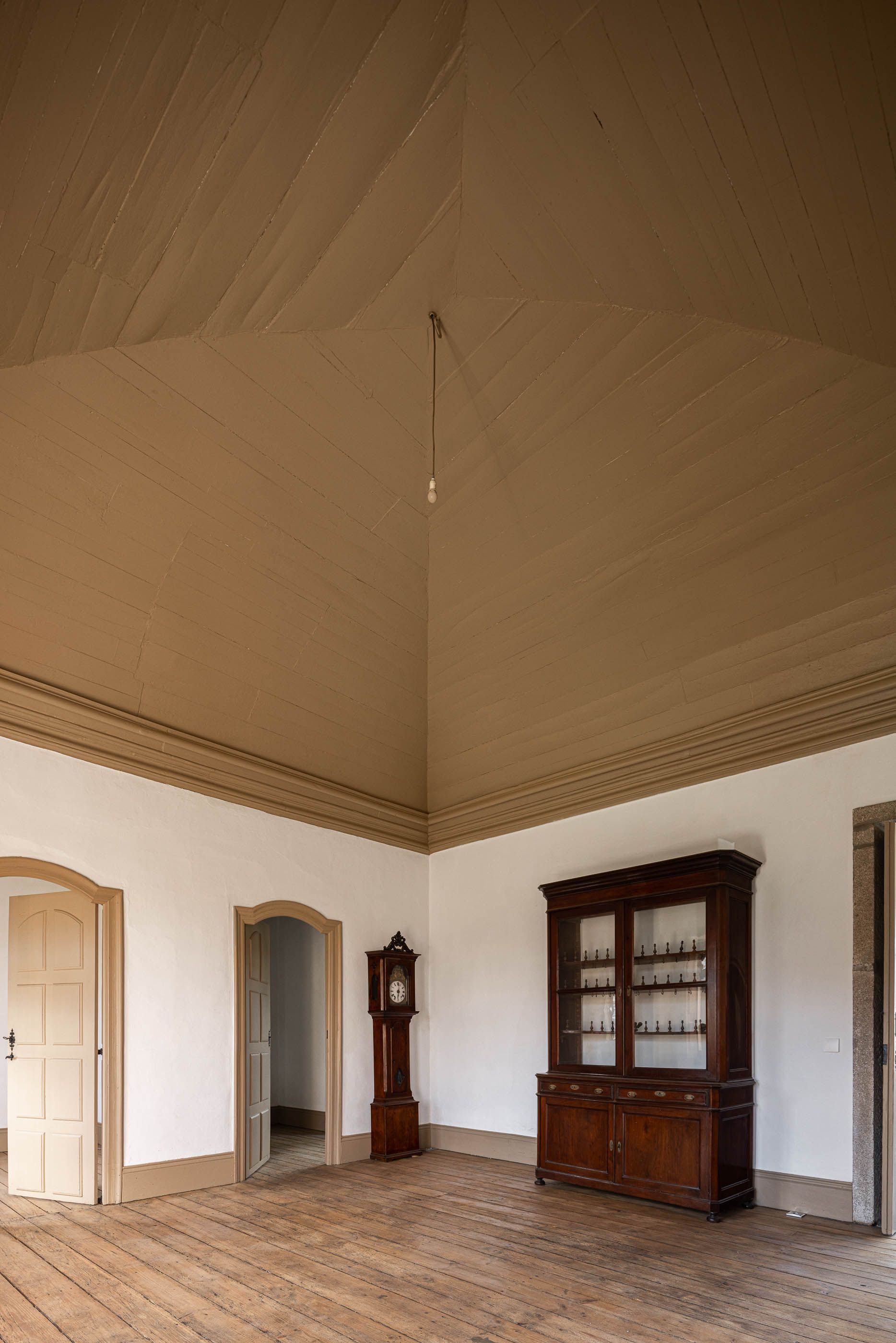
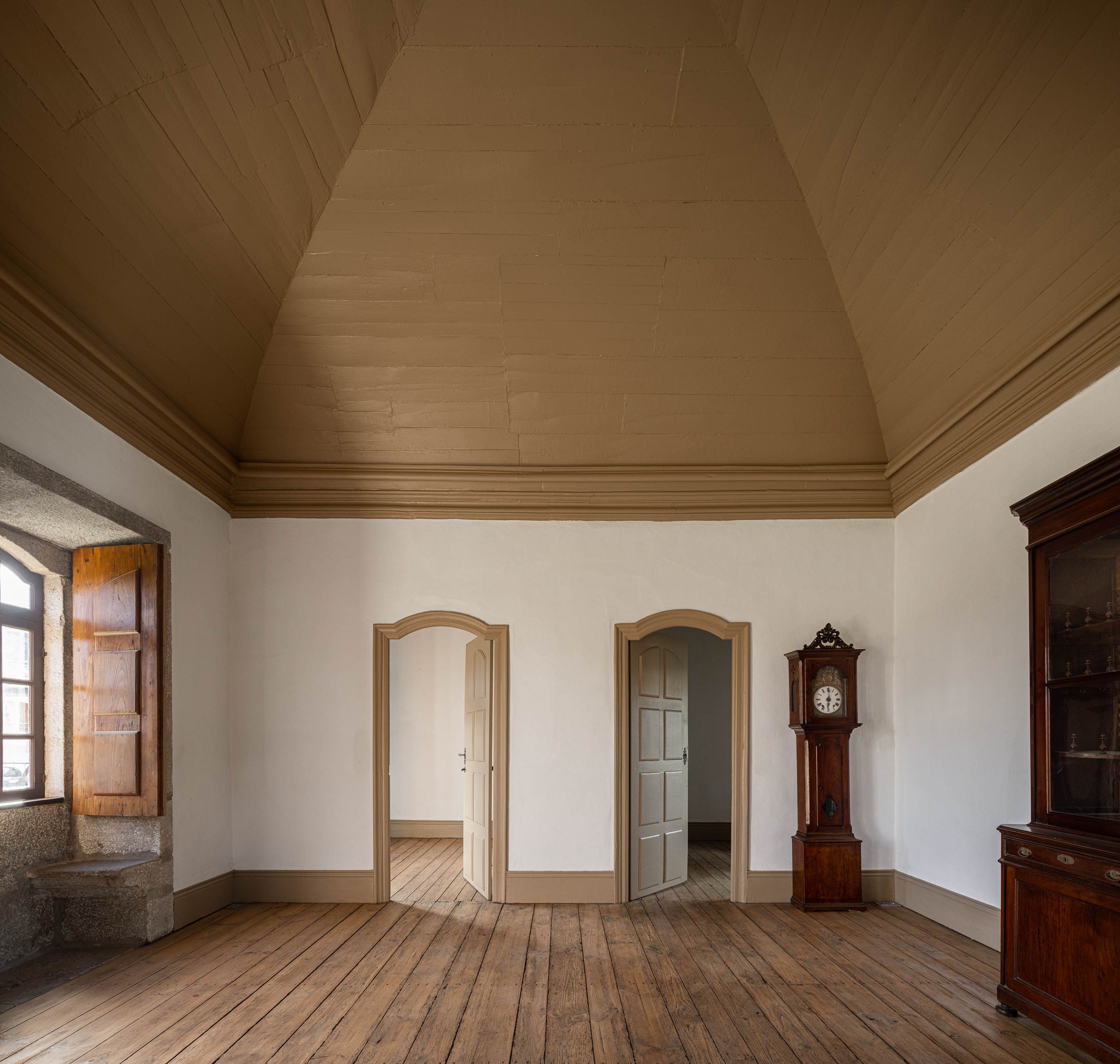
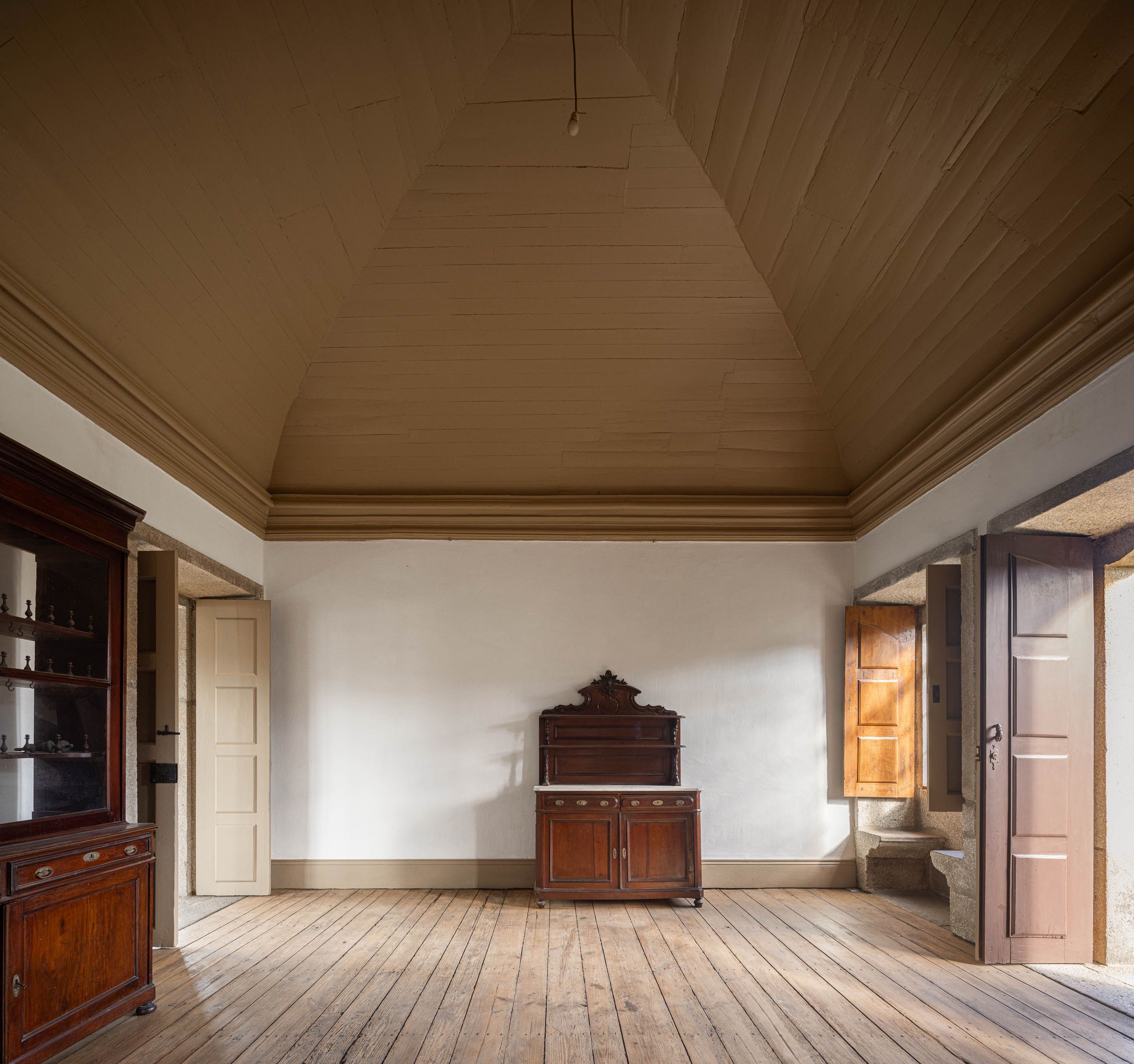
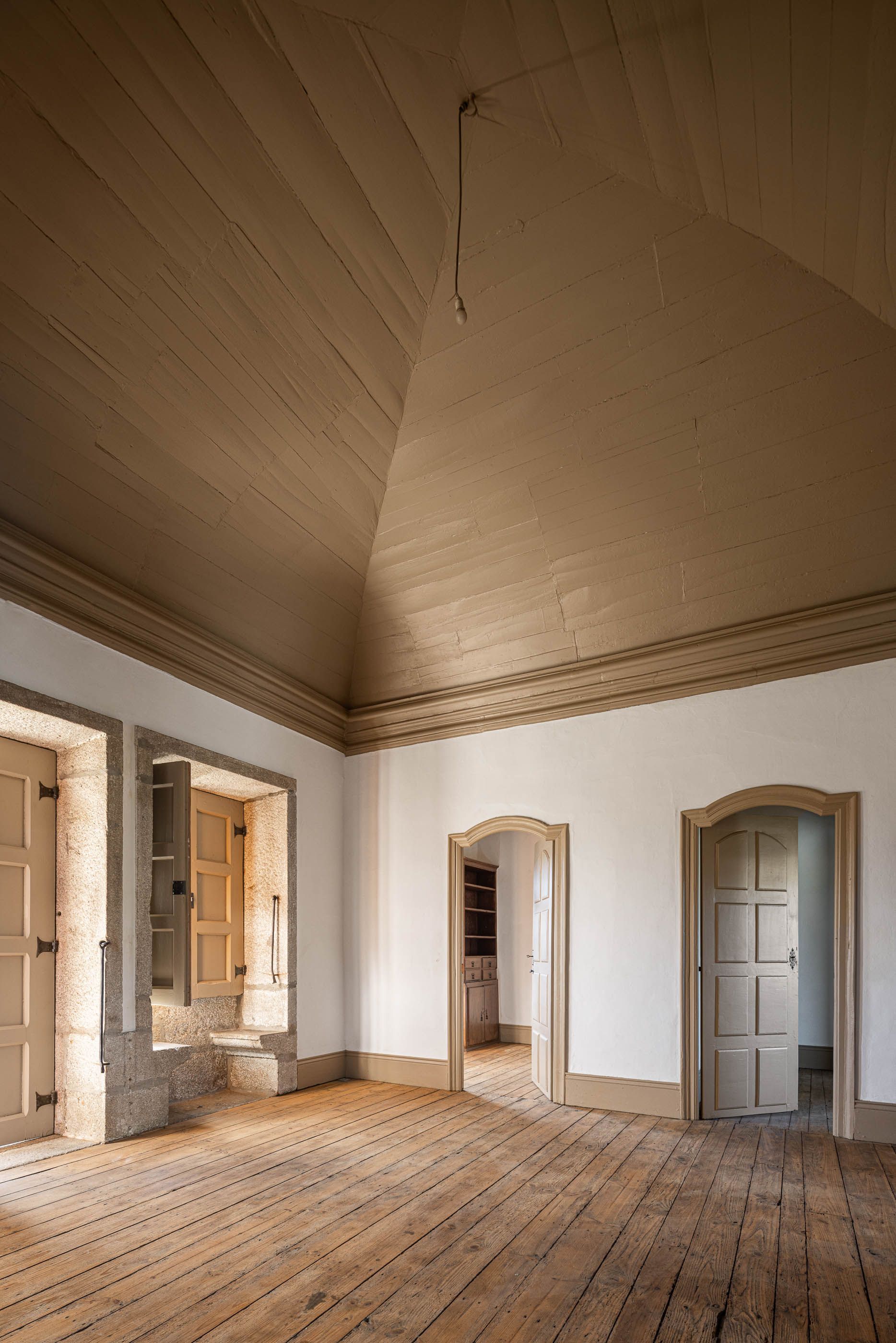
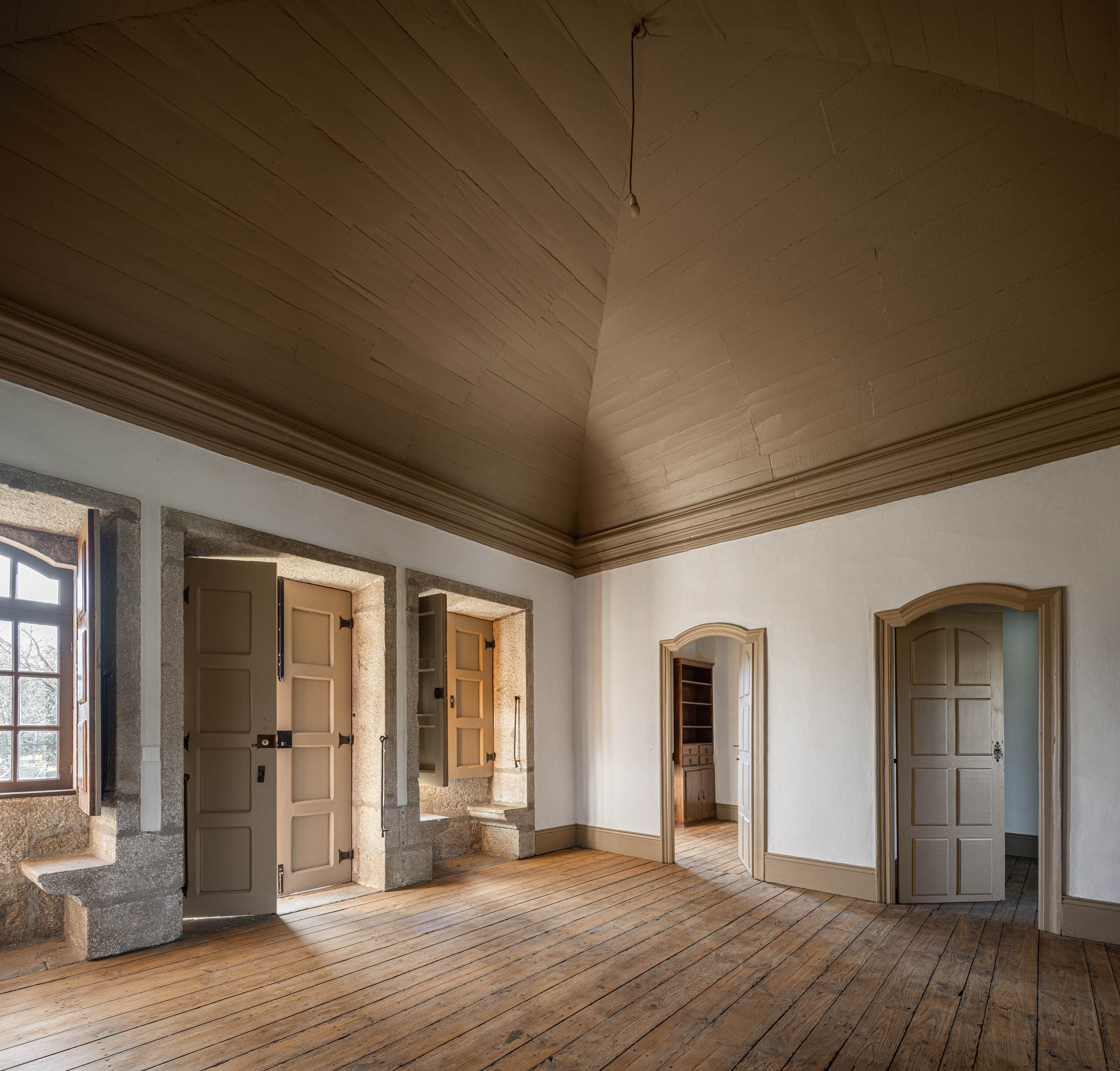
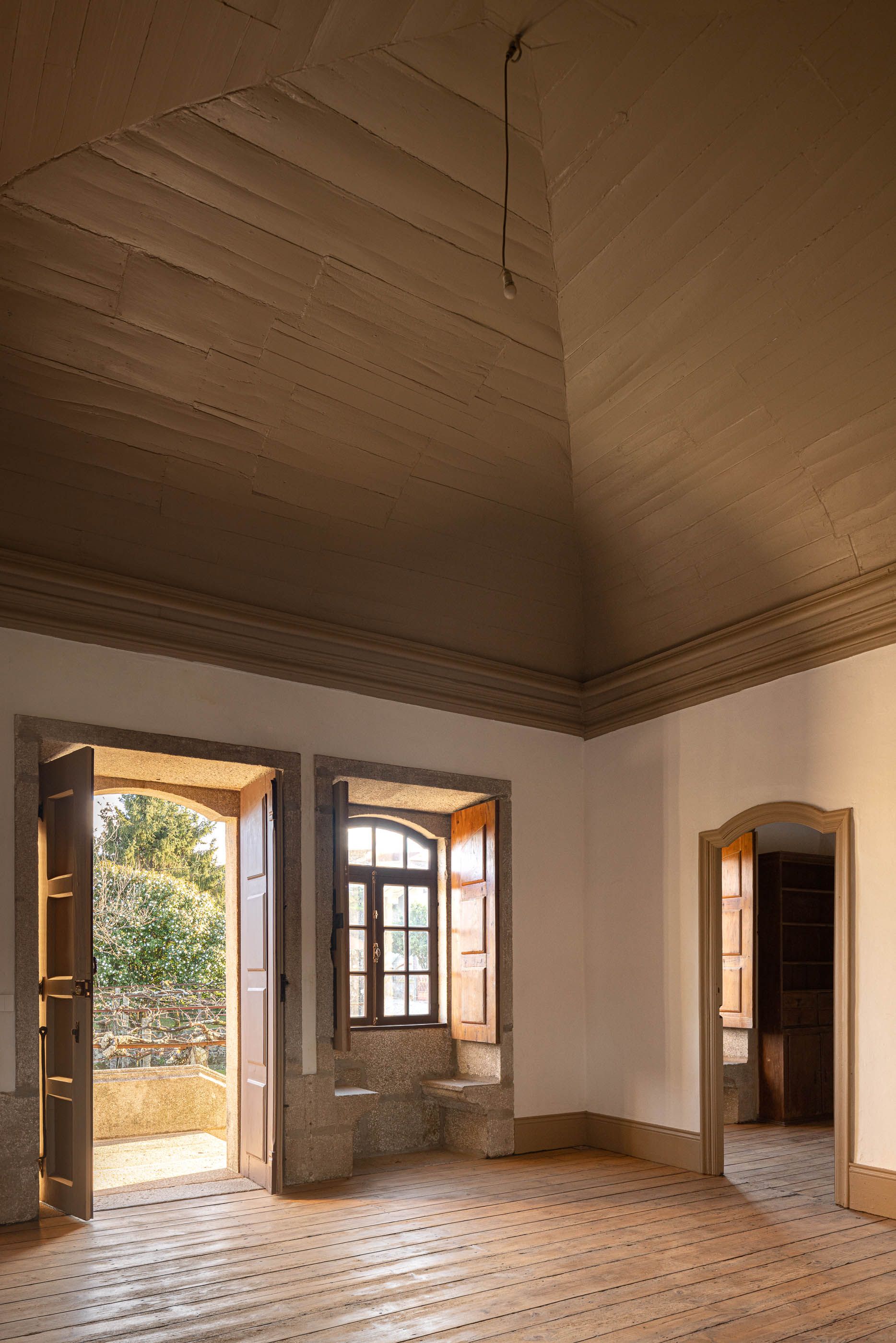
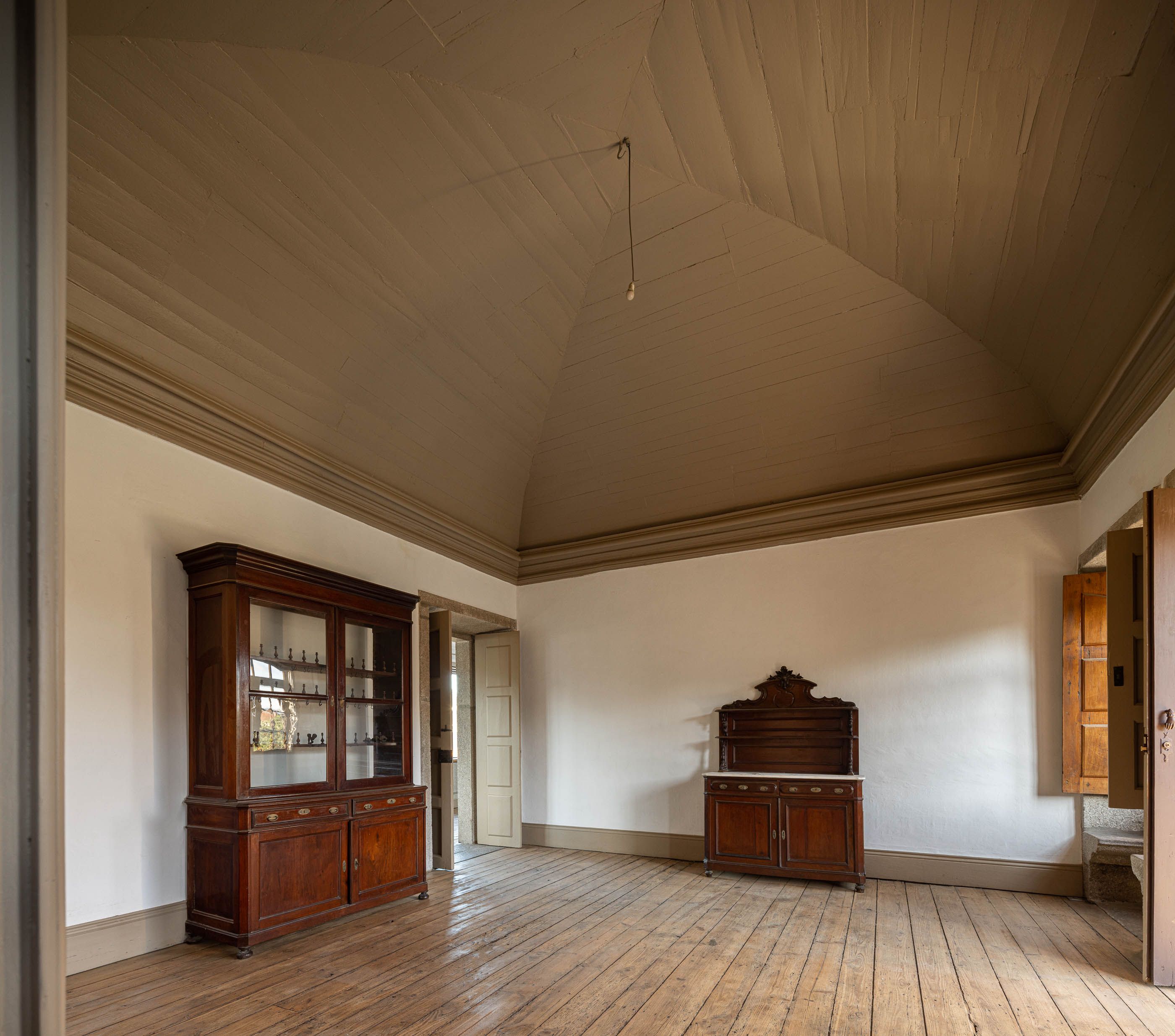
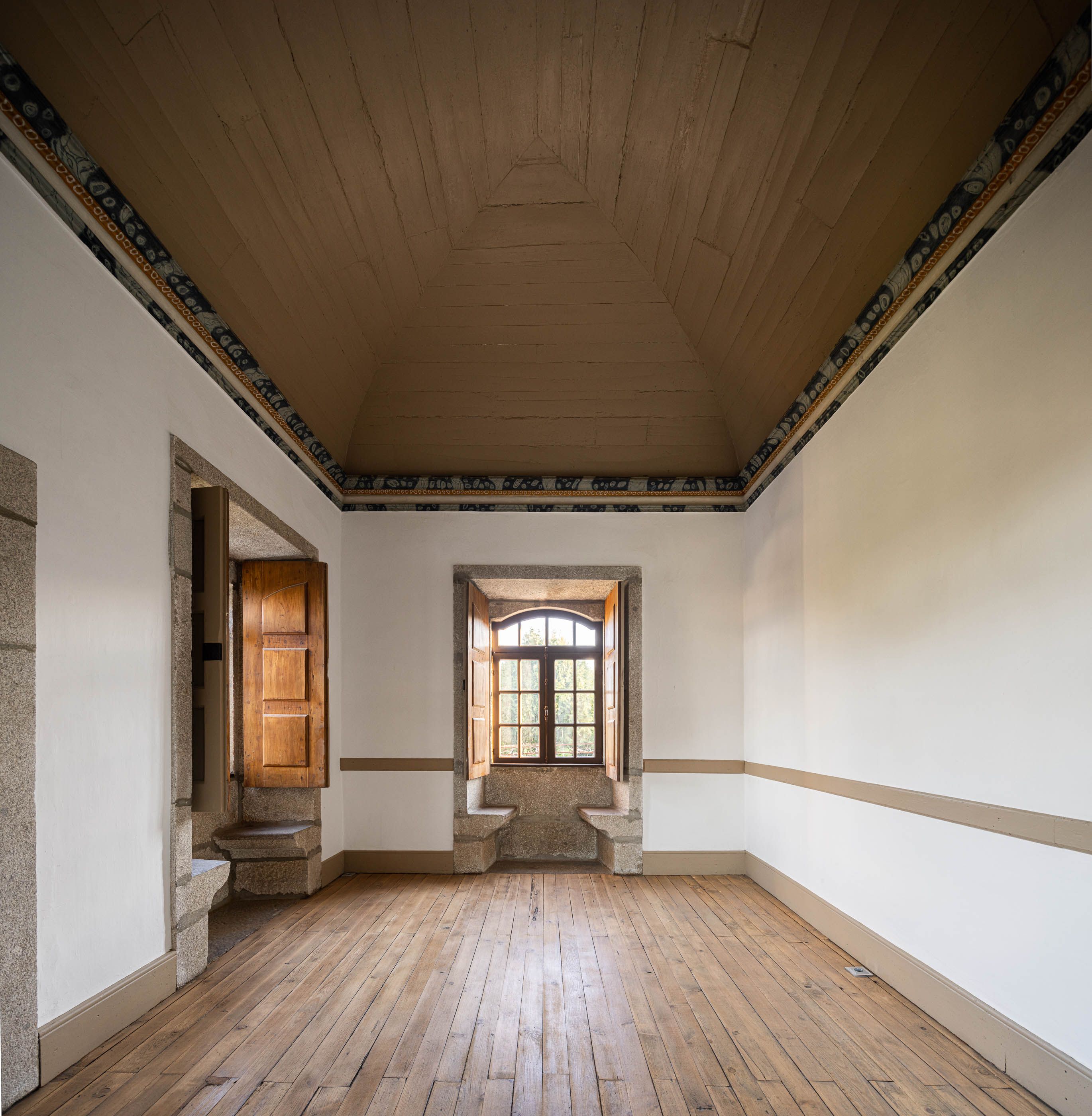
The house has two floors, with a symmetrical main elevation and a staircase with two symmetrical “L” flights, which begin one on each side of the facade, to join in the center, next to the main entrance door, access to a large room. The house is organized around this room, which combines reception, living and dining functions, distributing access laterally to the bedrooms and the balcony at the back. From here you can go to two other rooms (one of them now transformed into a small kitchen and a bathroom), to the chapel's high choir and to a service staircase that leads to the lower floor, where you can access the patio and the old kitchen, originally separated from the house. The lower floor consists of two stores, where implements and agricultural products were kept.
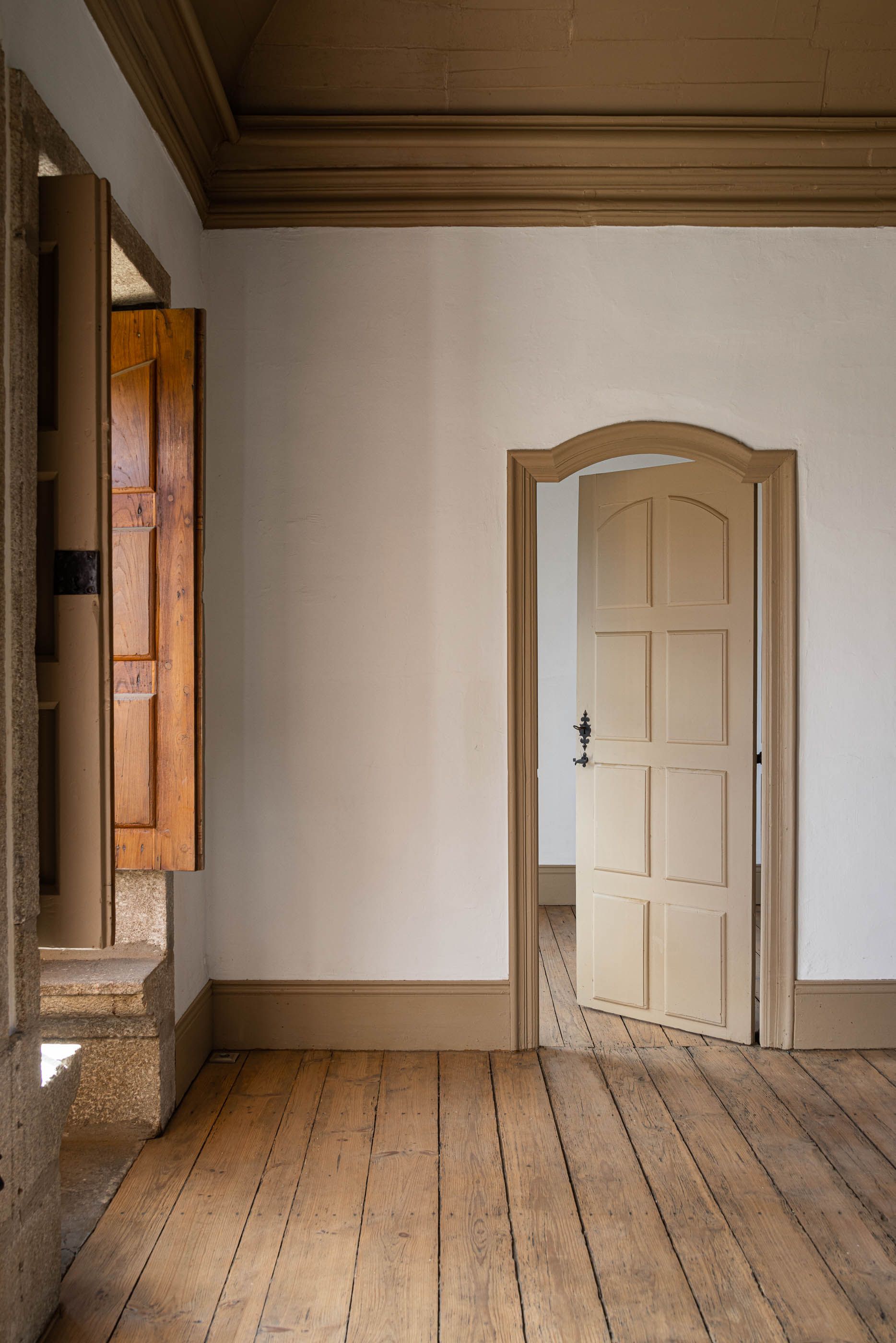
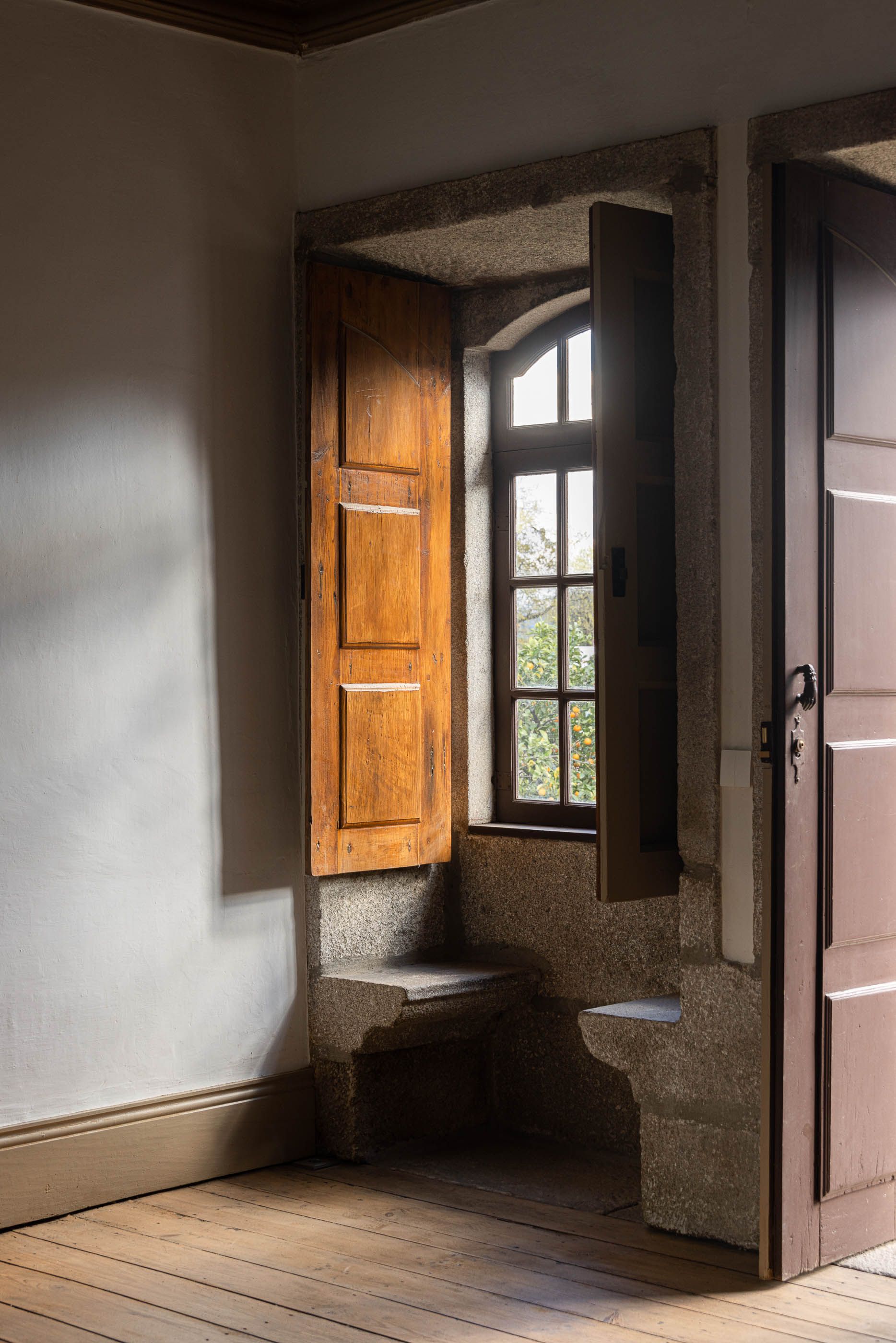
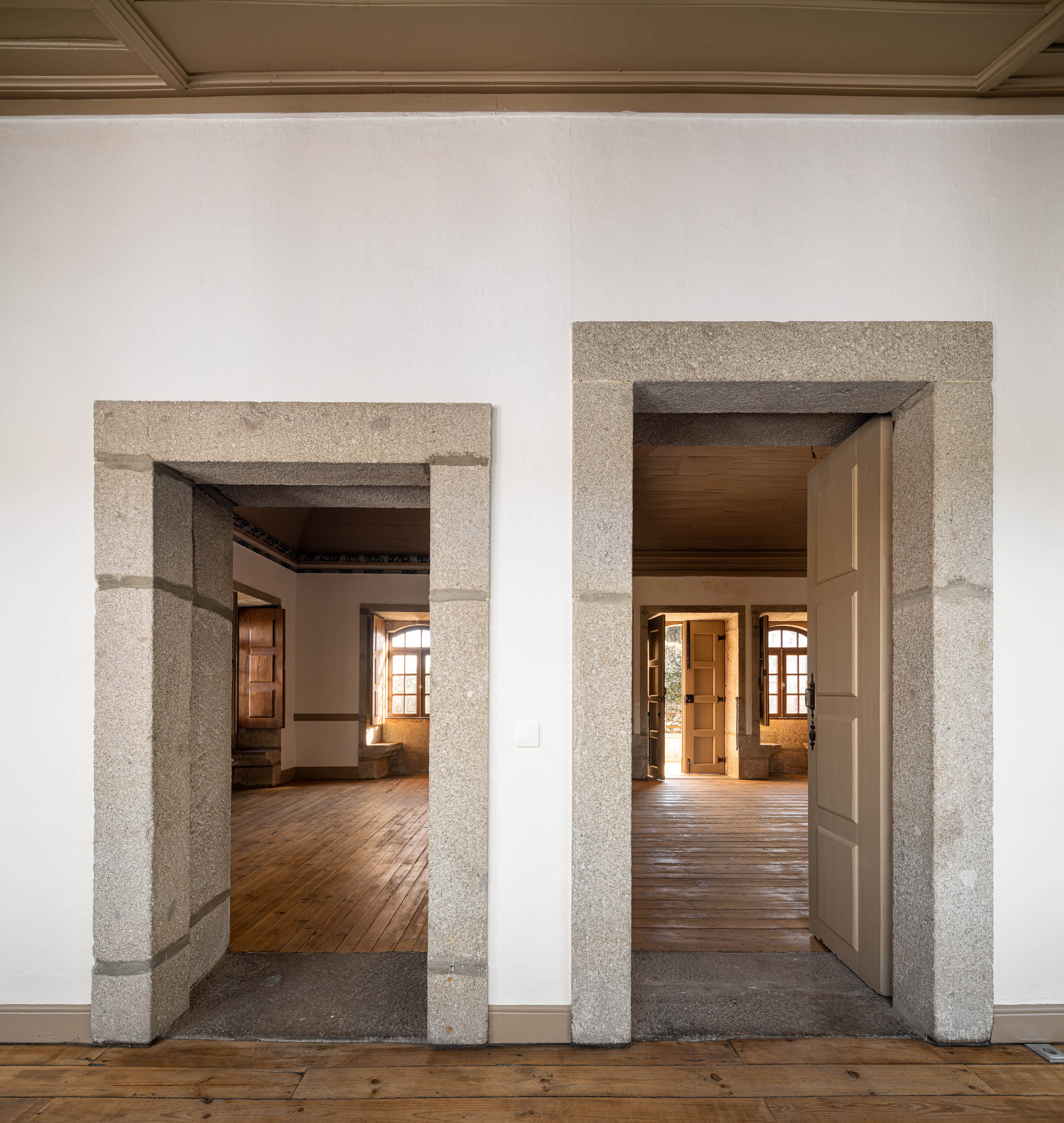
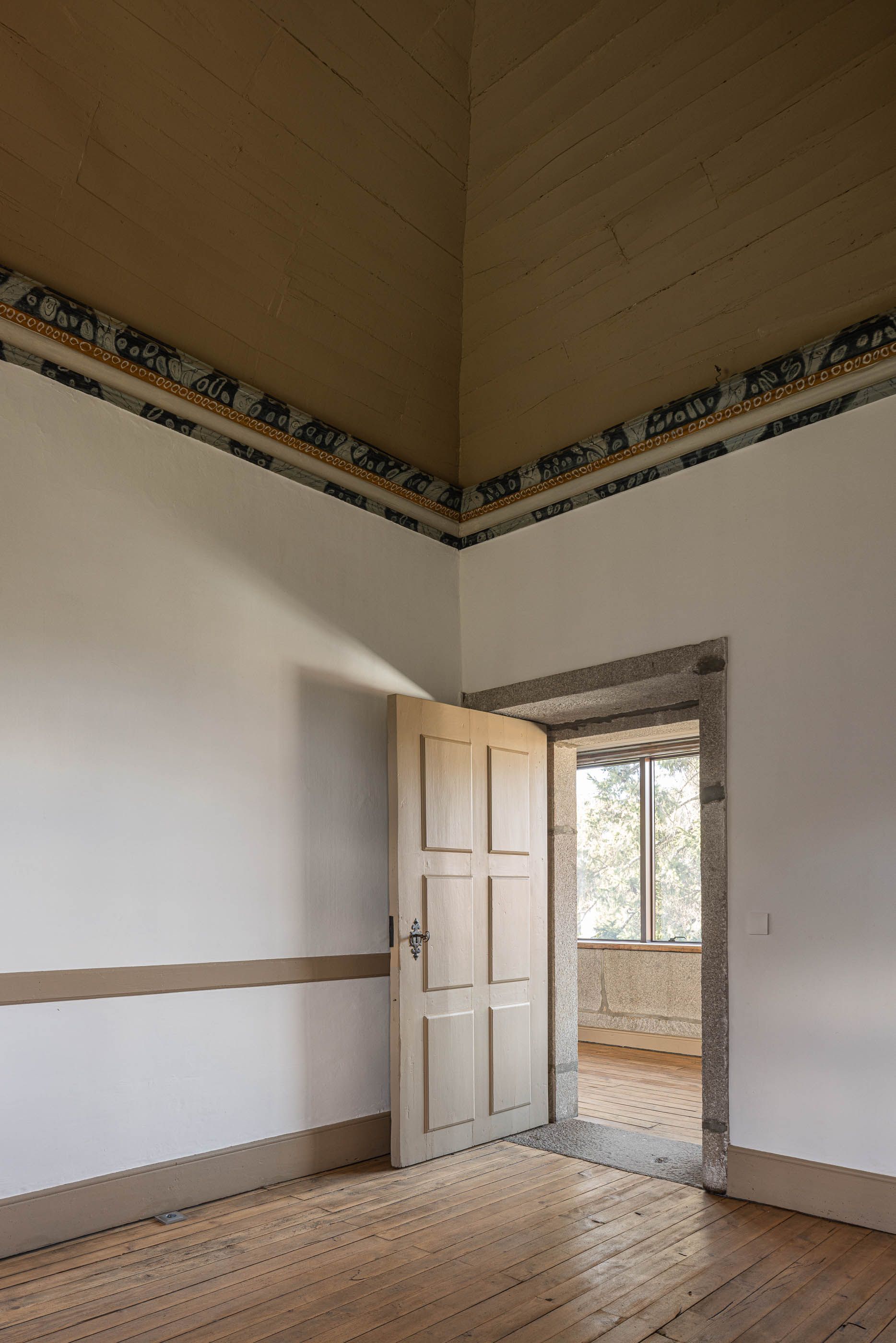
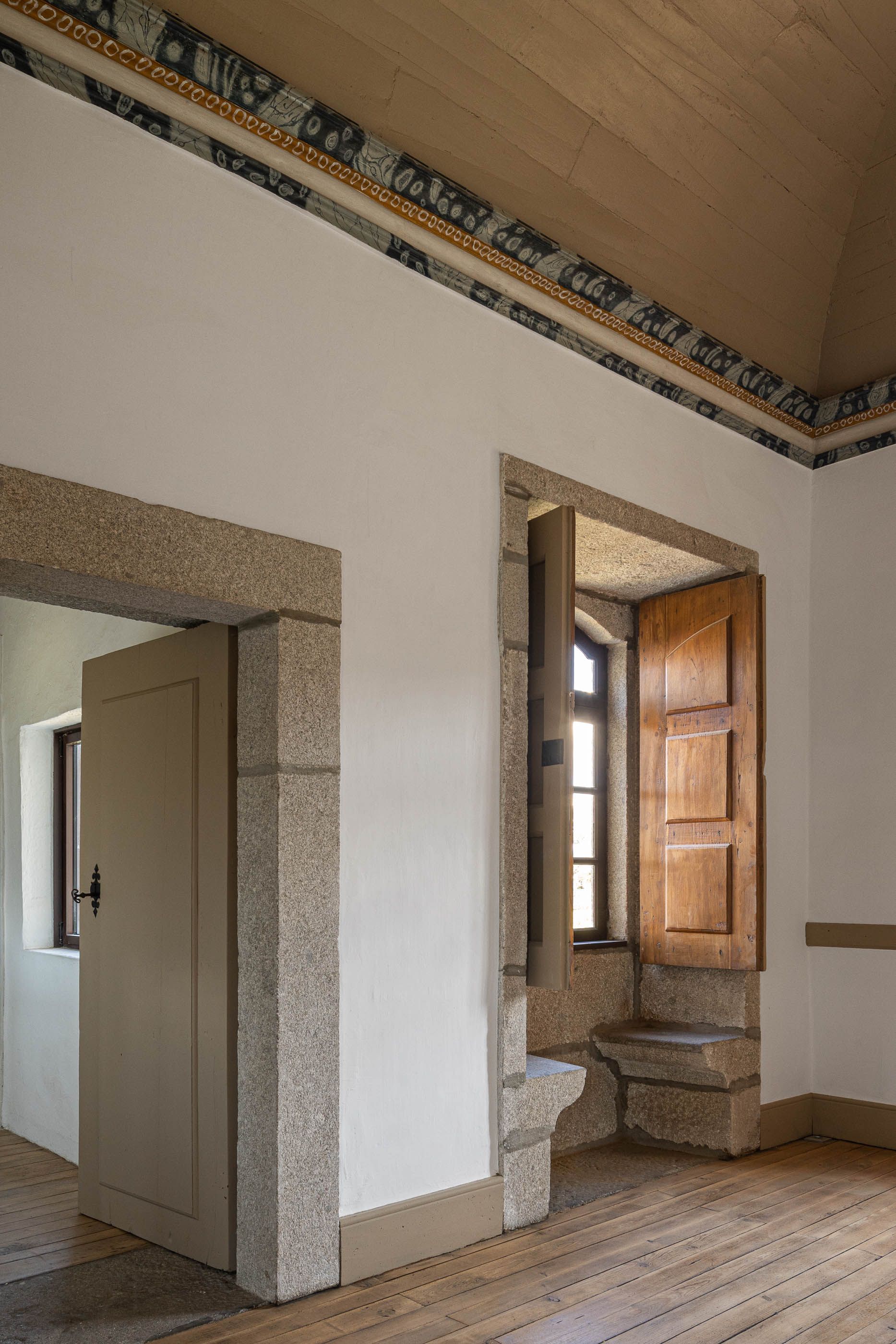
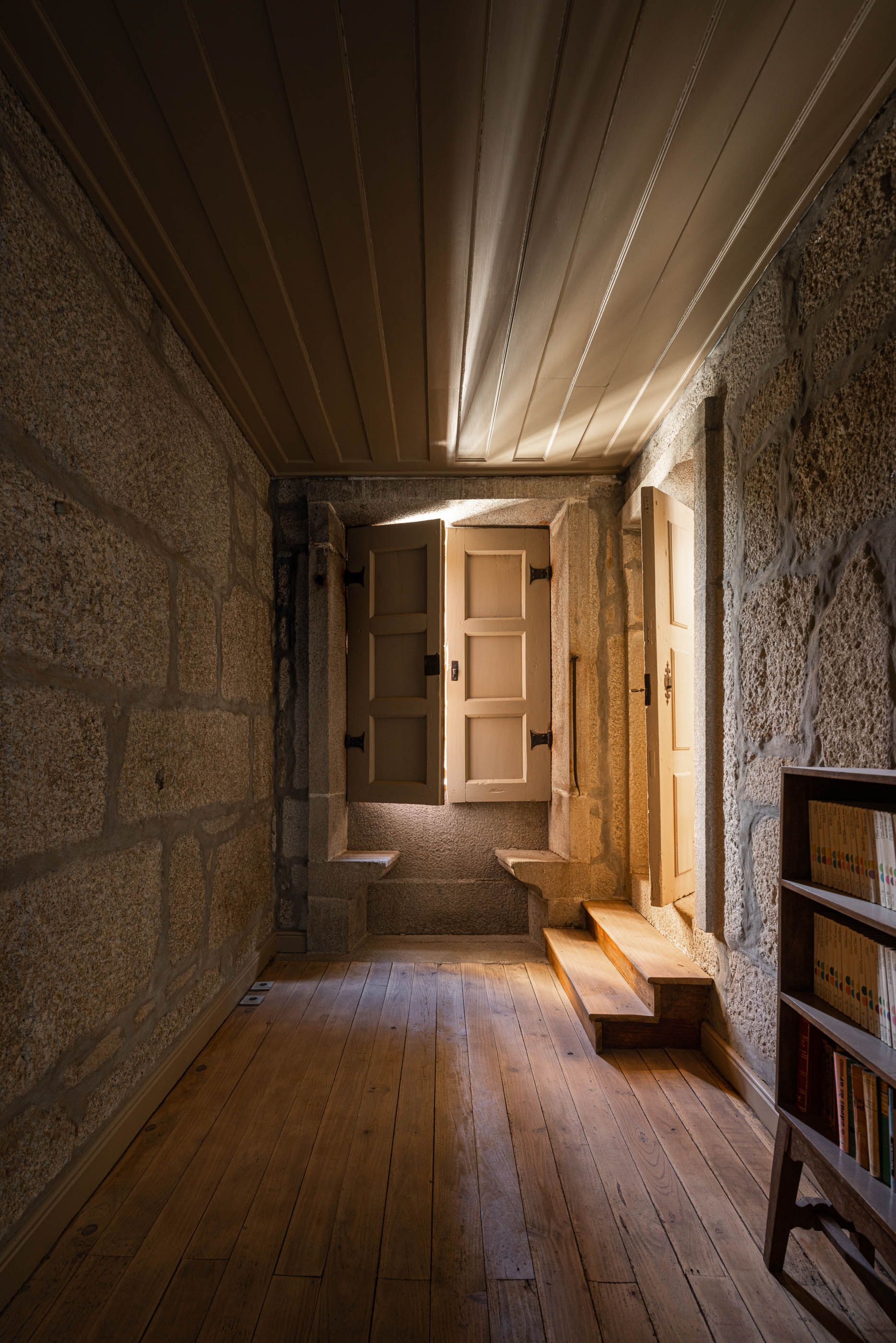
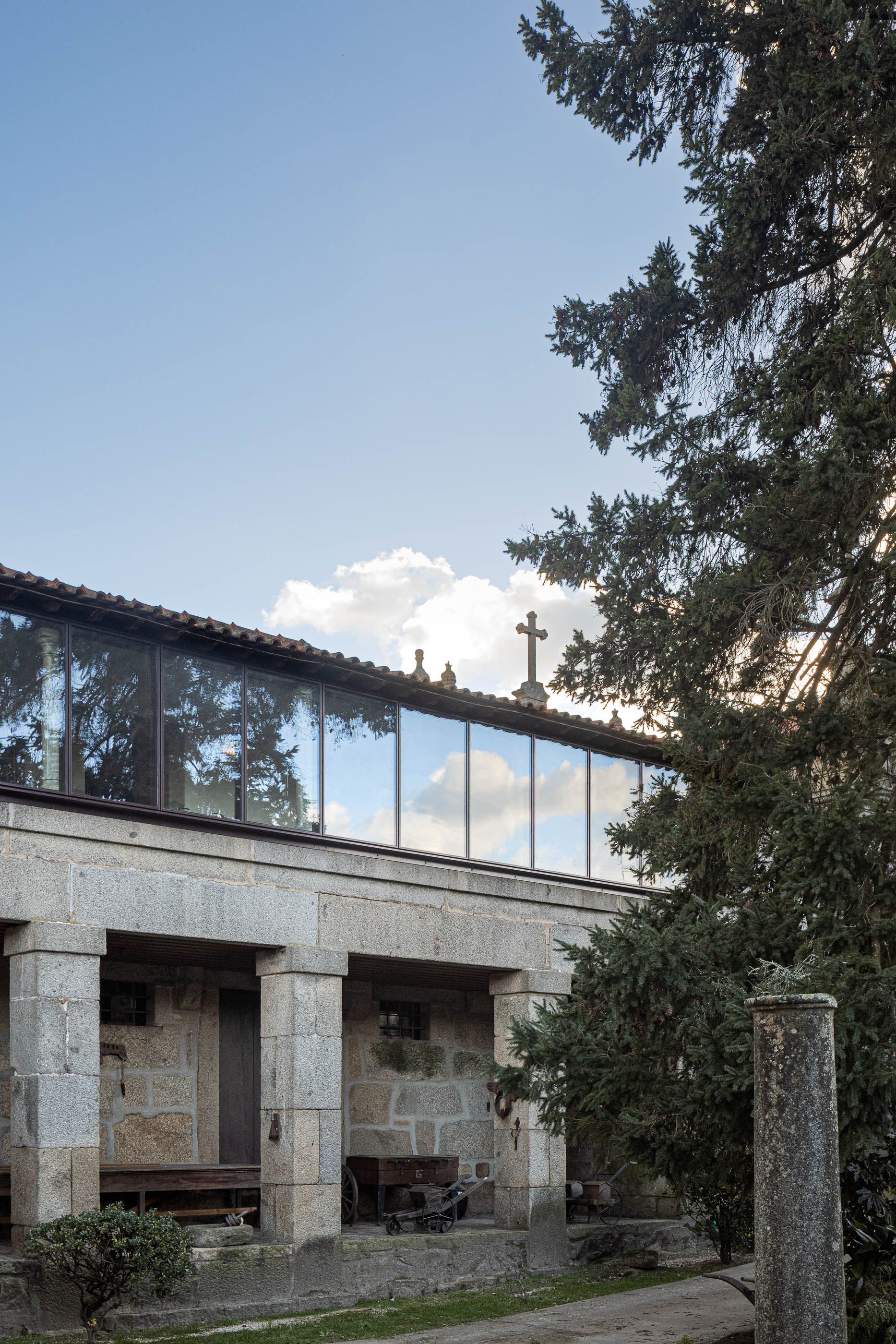
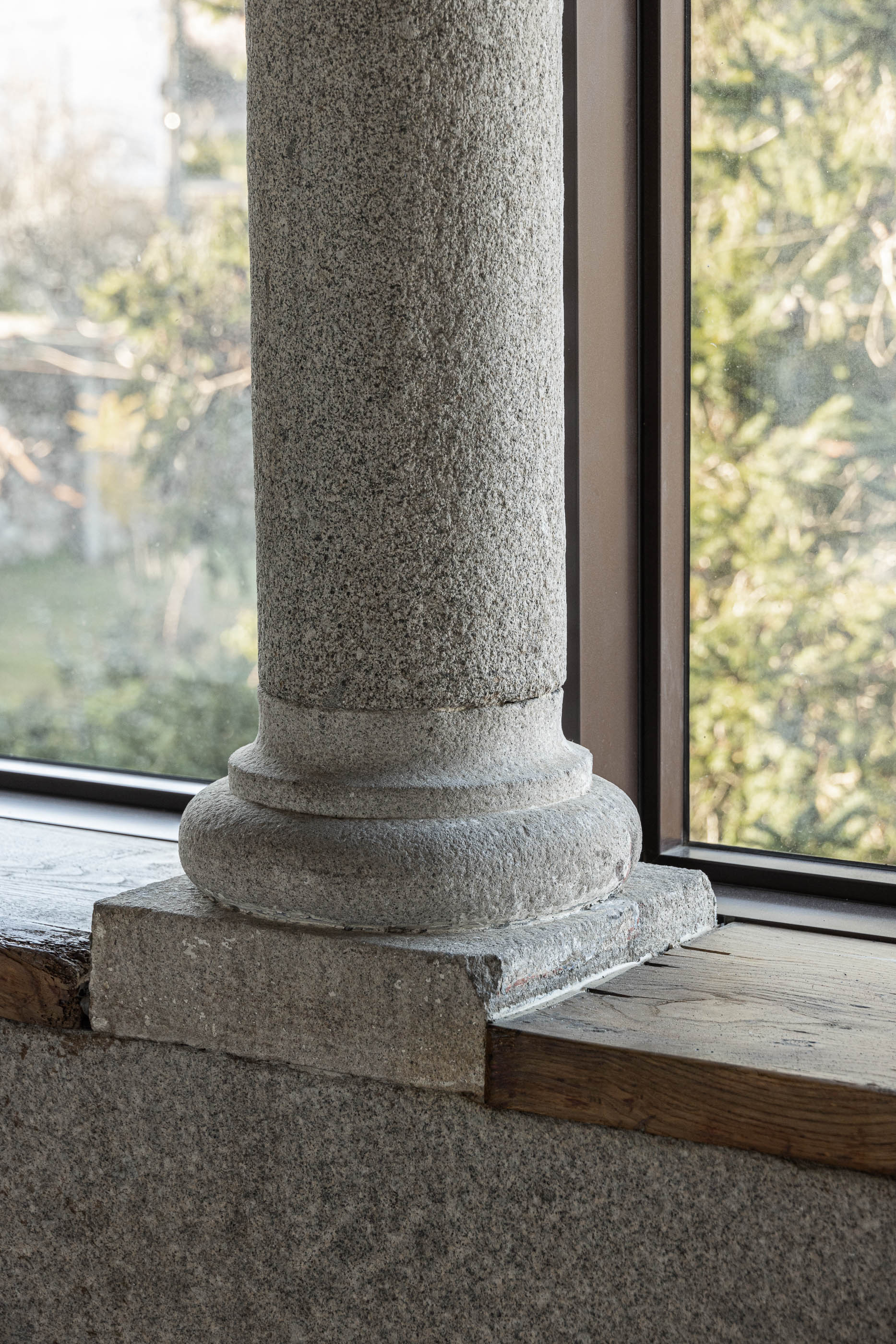
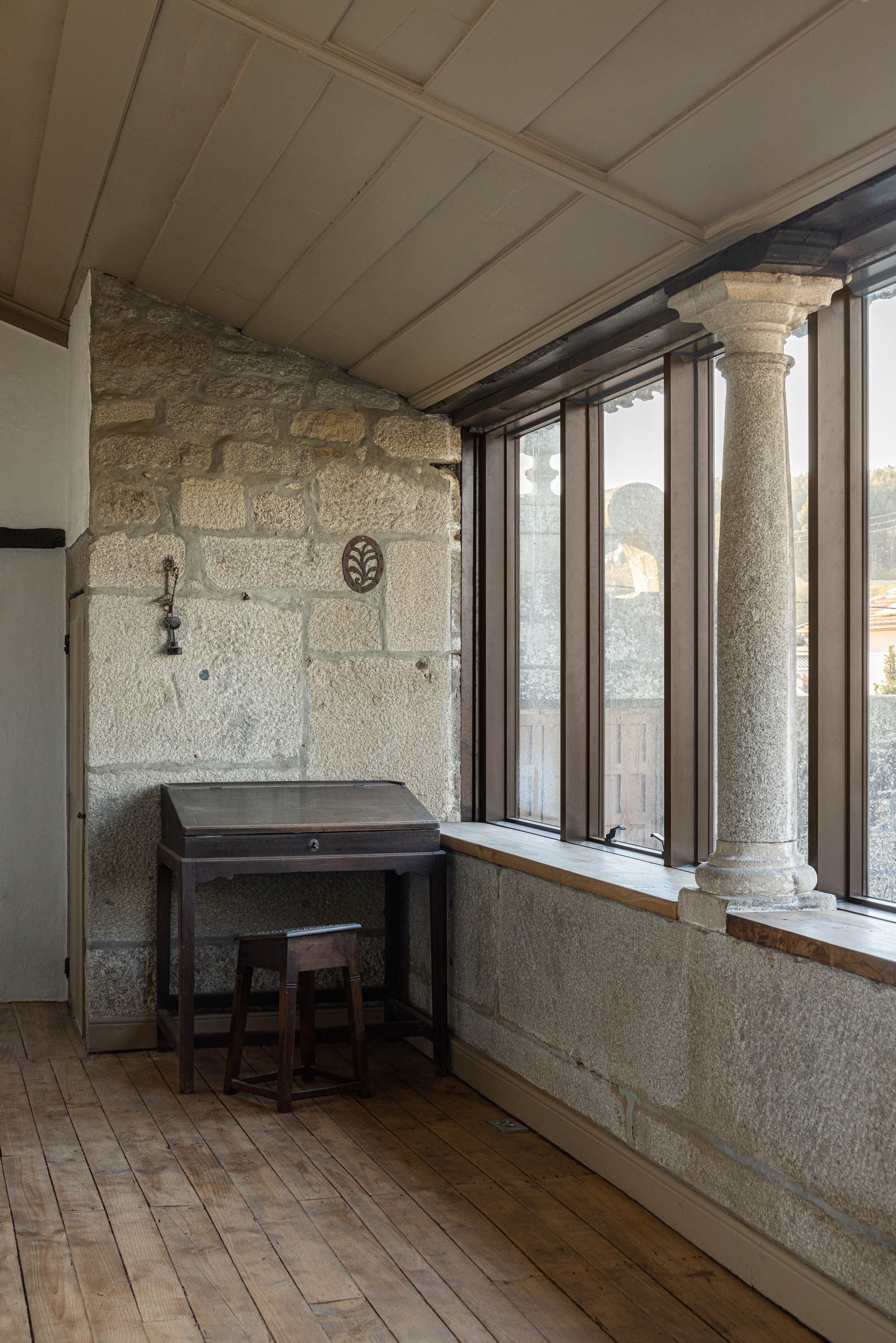
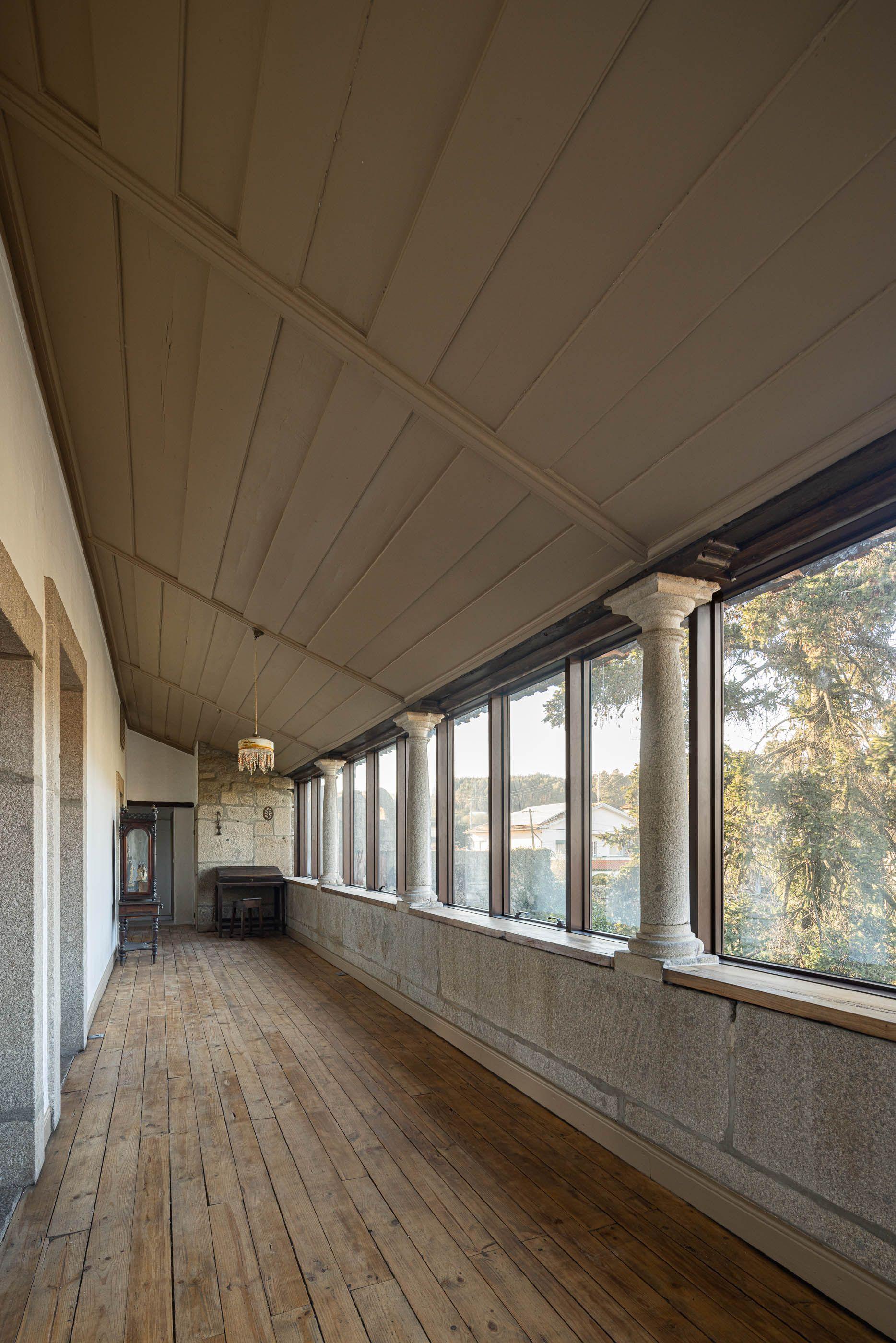
The two buildings (house and chapel) are characterized by the use of granite in the exterior walls and their ornaments, in some interior walls with structural function, in the stair guards and in the columns of a balcony at the back, with the remaining interior walls in partition. The construction elements that make up the floors, roof structure, ceiling linings, doors and windows are made of wood, mostly brown.
Generally speaking, the house was in good condition, requiring a roof overhaul to prevent rainwater from entering in some places, which was damaging the coffered ceilings. However, the house did not guarantee minimum comfort conditions, especially in winter, because the flooring and ceiling lining had some cracks between the boards which, in places of contact with the outside, did not prevent the undesirable passage of cold air currents. . The chapel showed signs of greater degradation, mainly in the altarpiece and in the rammed earth vault, pathologies that had already been detected since 2000, as described in one of the referenced publications ¹.
In the first visits to the house, after carrying out a summary inspection and given the visible quality of all the materials, the expression of all the finishes and its serene aging, the project's premises were dictated, of not altering absolutely anything of the existing , which should be maintained, conserving.
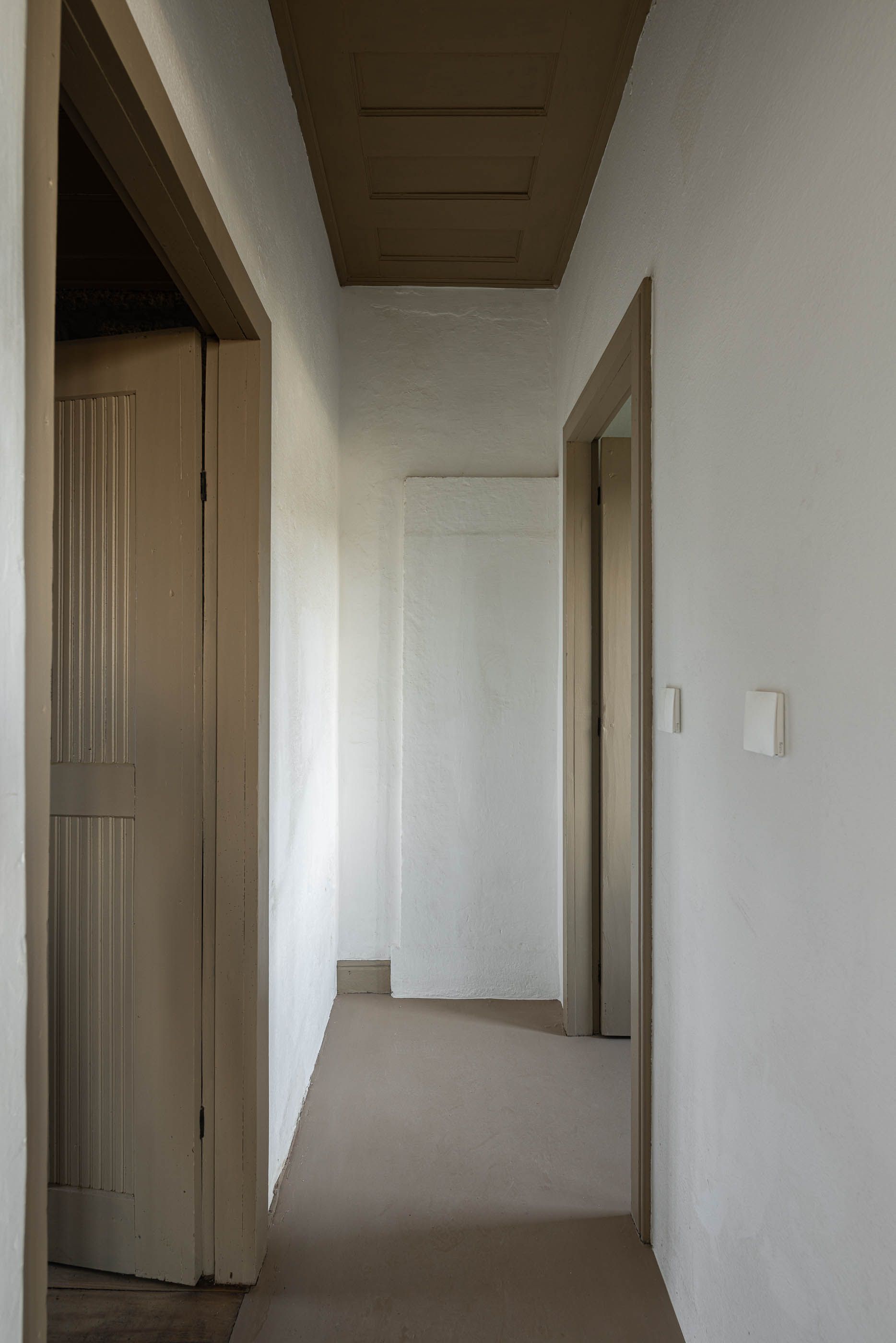
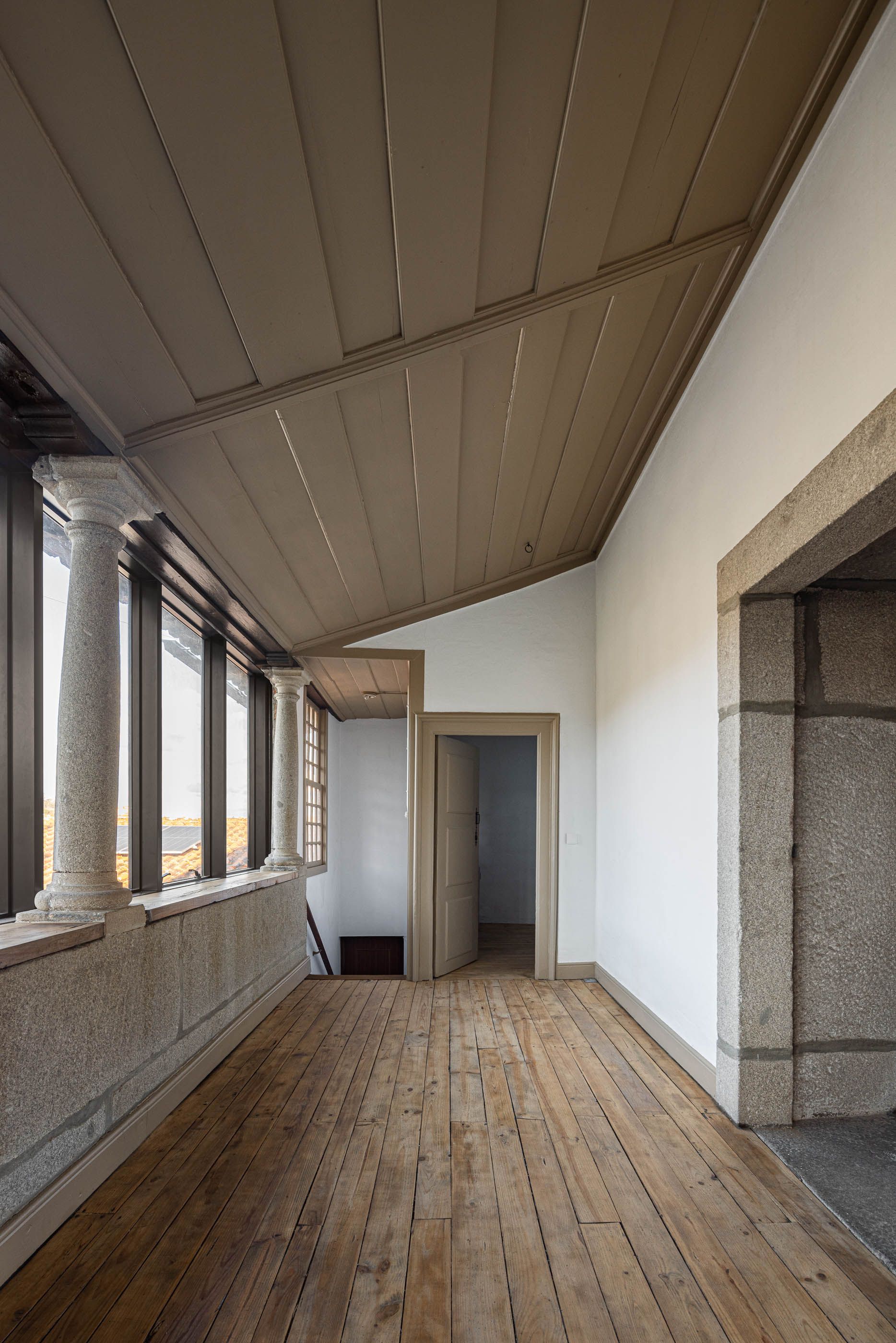
Thus, respecting this principle, specific, almost surgical repairs and replacements were carried out on the wood (floors, doors, skirting boards, trimmings, ceilings). The structure of the floors was reinforced and the floor consolidated with wedges to reduce the oscillations that were felt. The floors were also insulated with mineral wool and covered with a wooden lining. Mineral wool was also applied to the ceilings to contribute to thermal insulation and ensure desirable comfort.
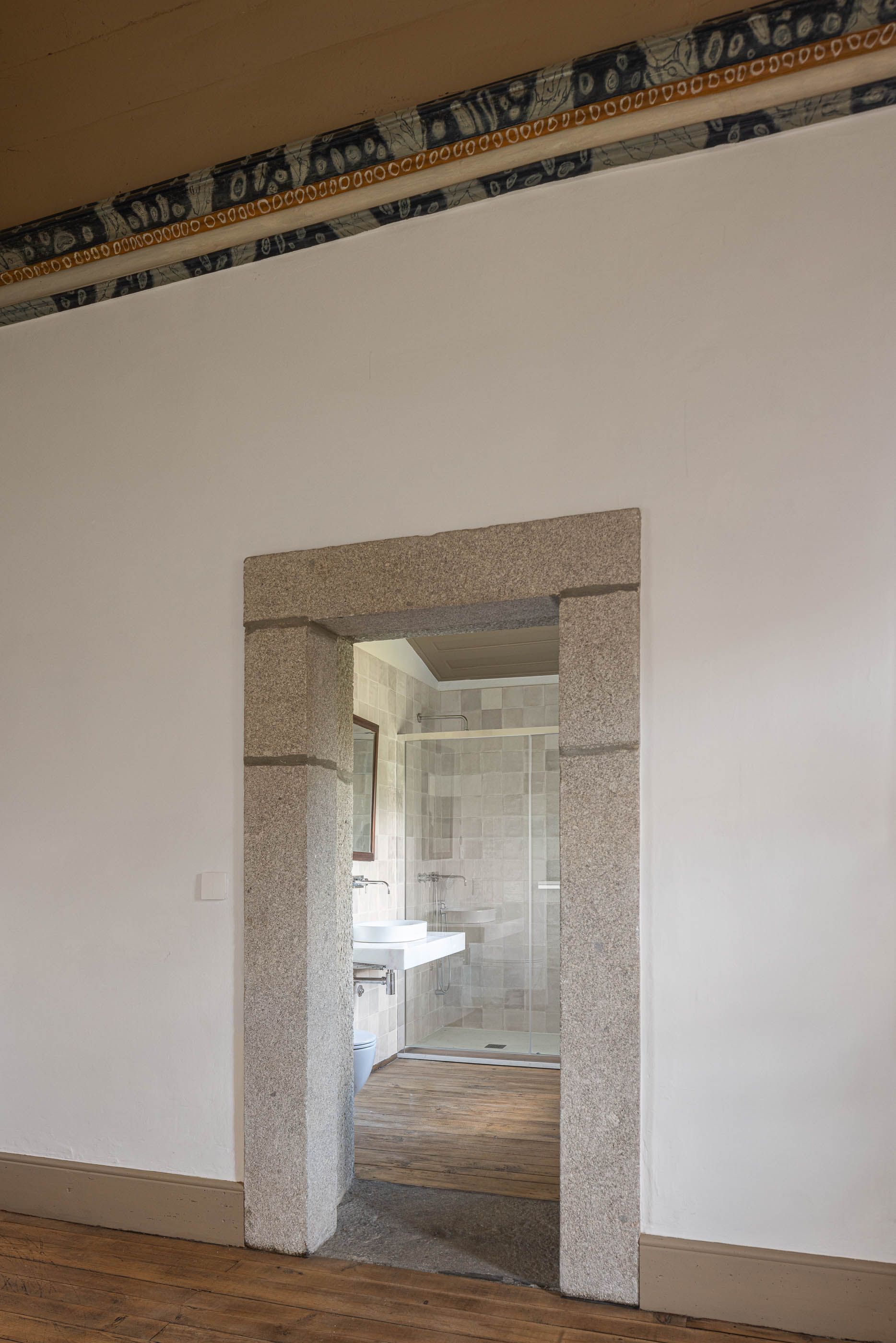
Intrusive interventions on the plasters, made up of “poor” mortars, which were simply repainted with milk of lime, were also avoided. To prevent this intrusion into the plaster, the layout of the electrical infrastructures was carefully delineated, passing exclusively under the wooden floors and through the ceiling lining, with the sockets being installed on the floors.
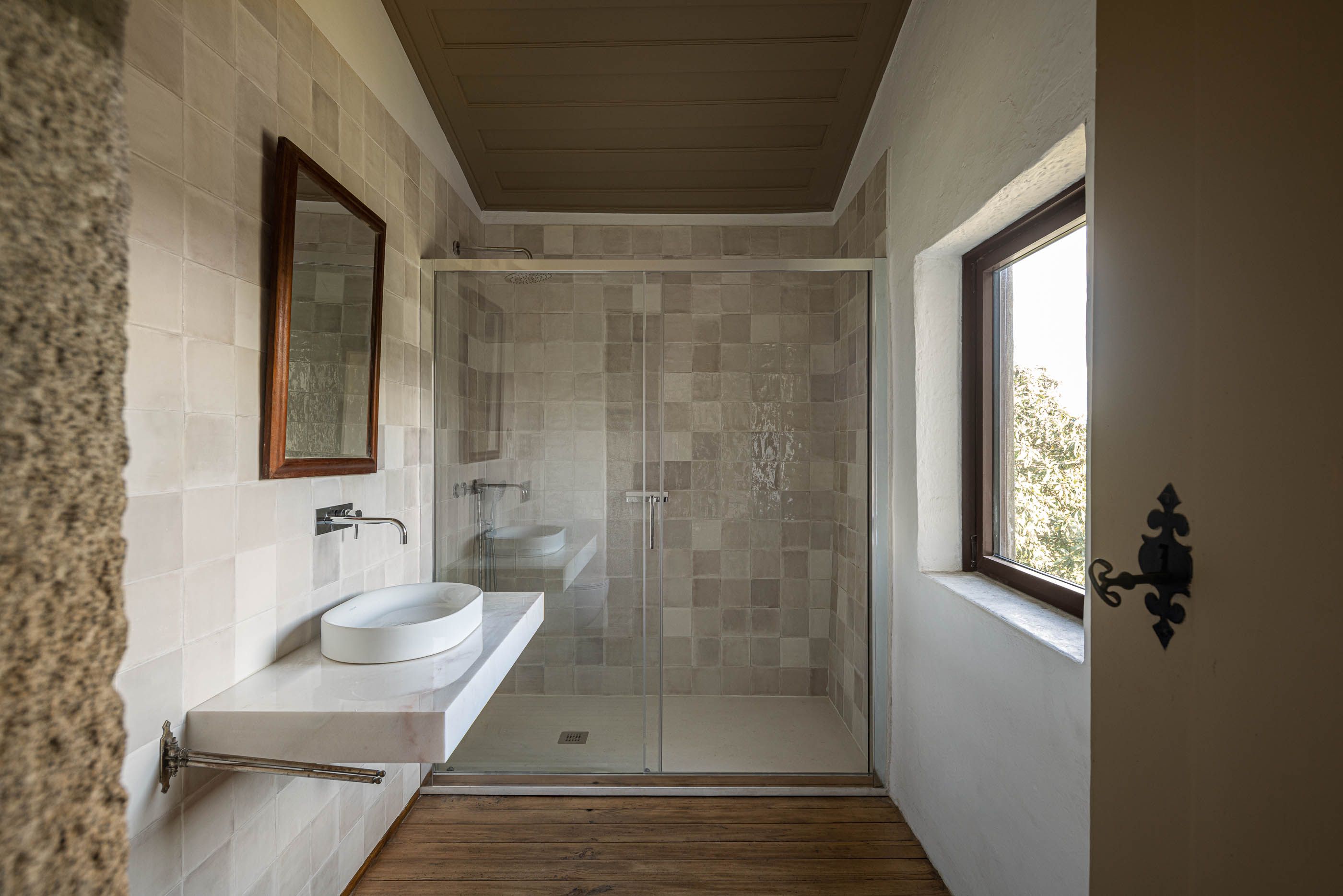
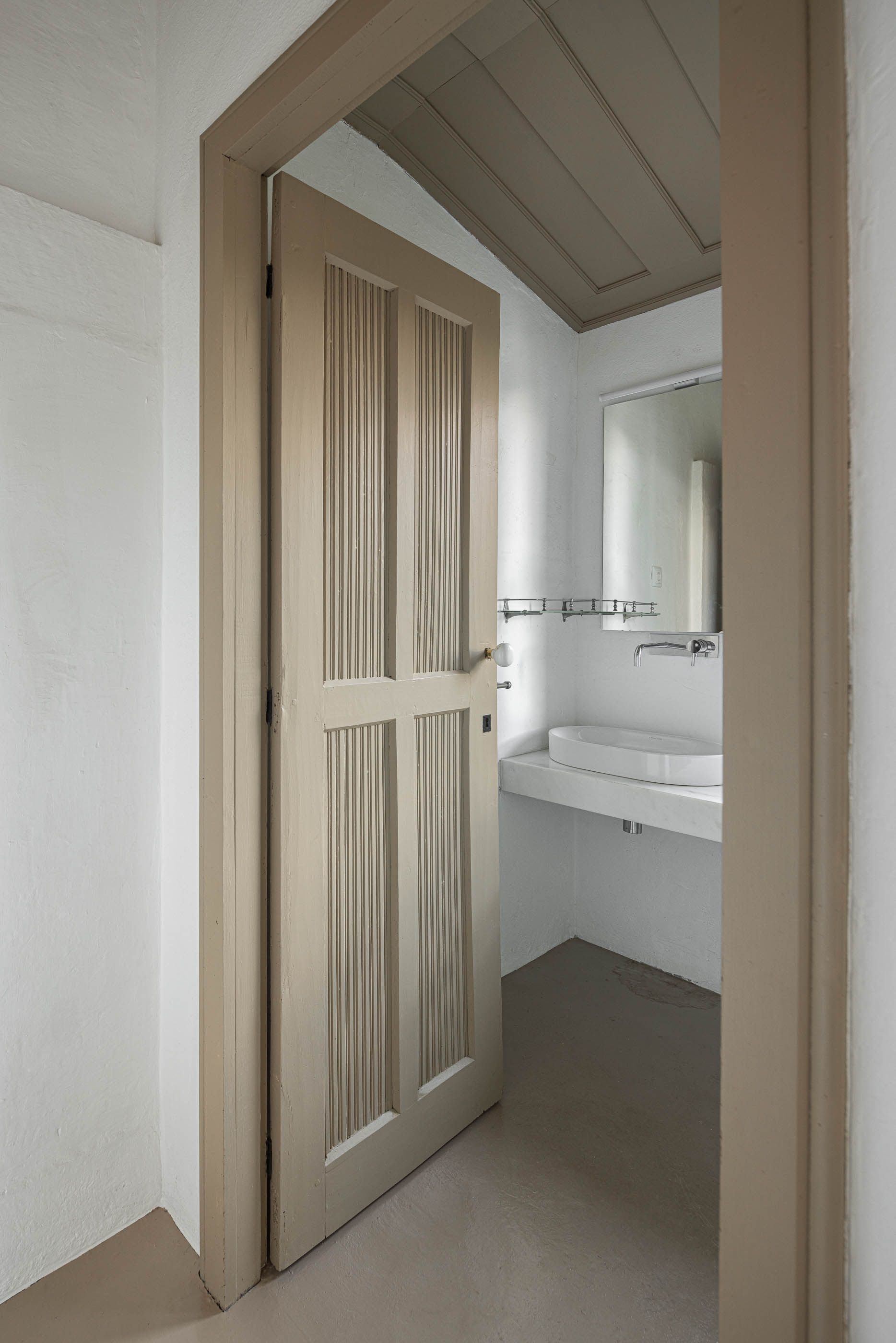
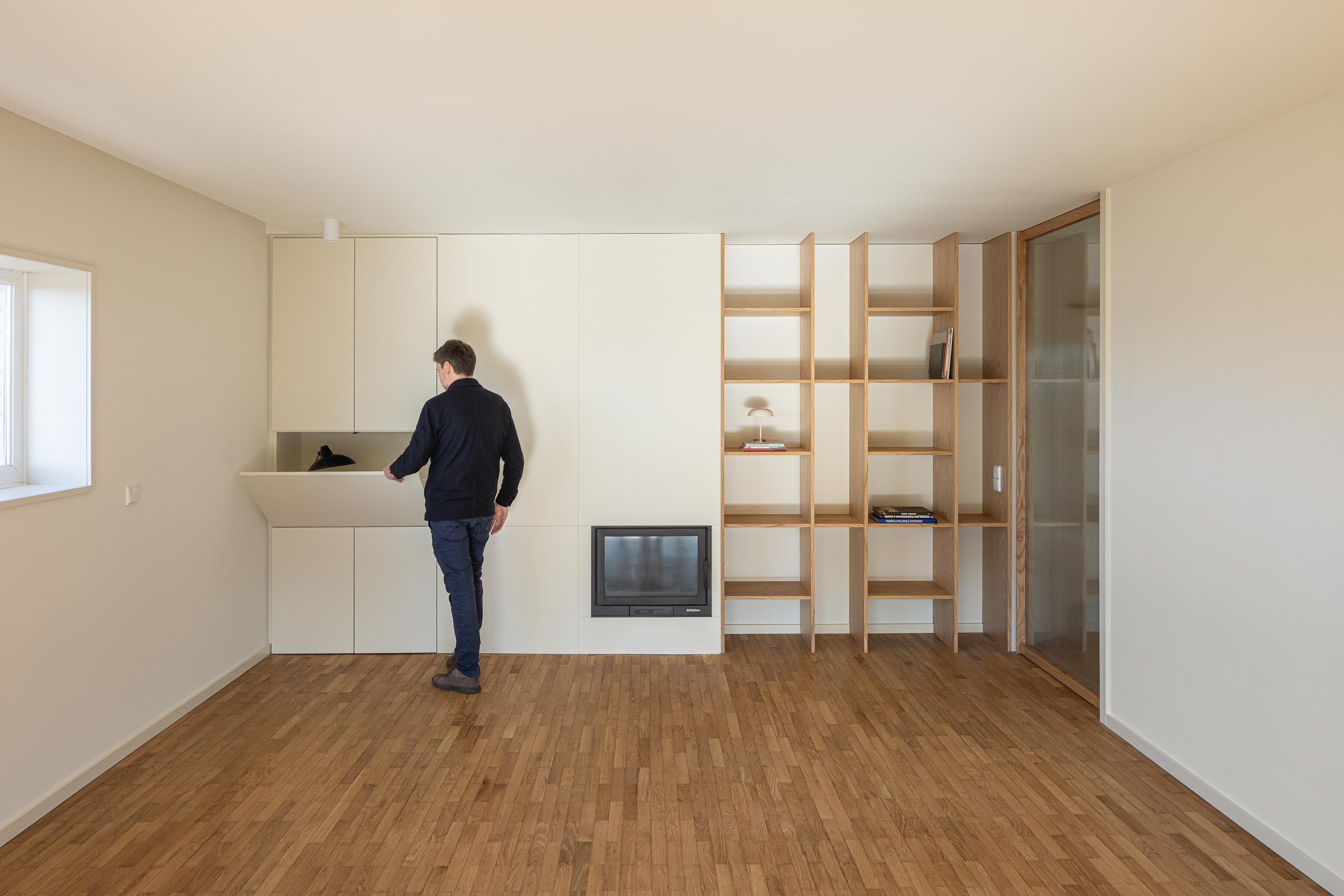
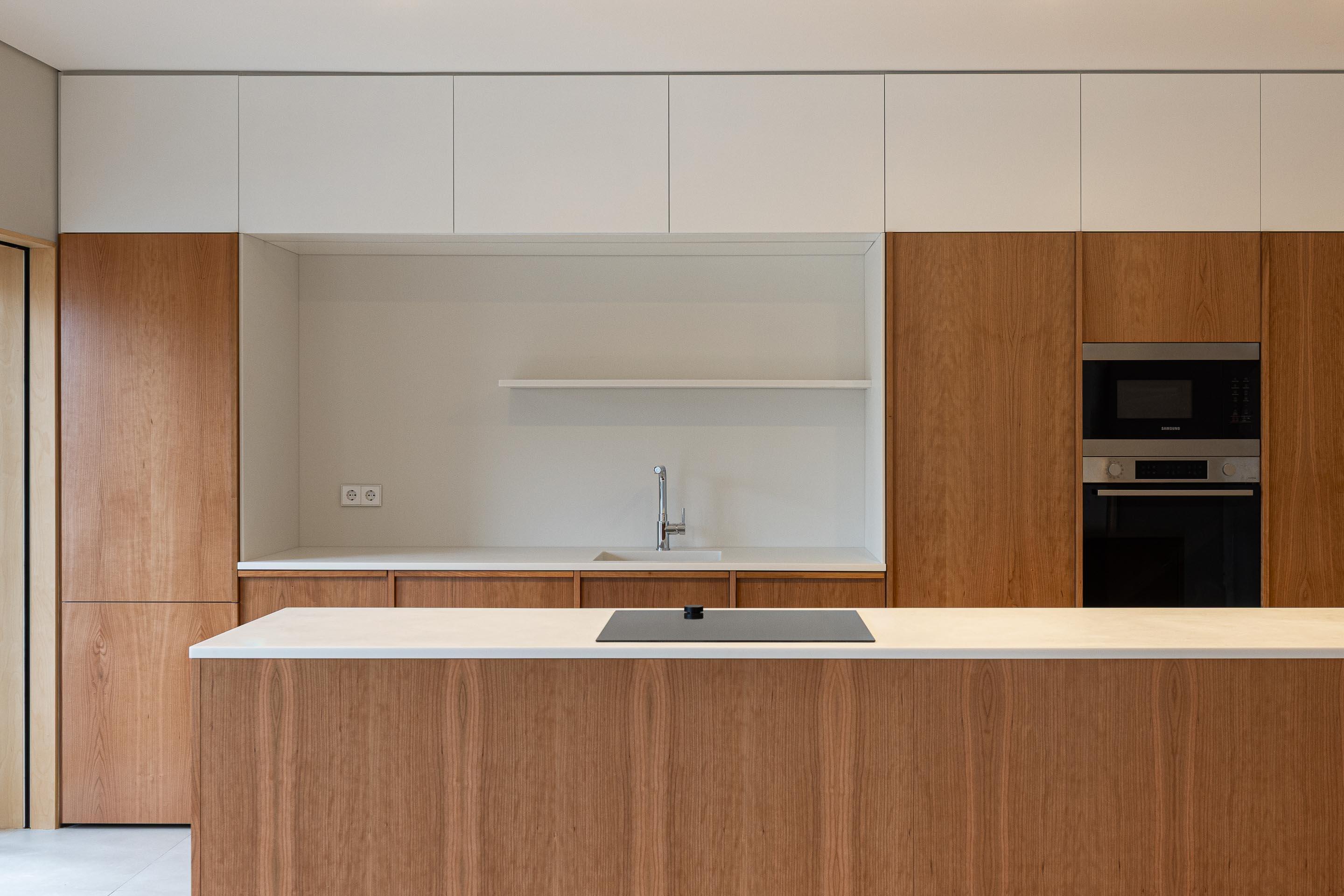
The intervention also included the transformation of an existing compartment outside the limits of the regular layout of the house, into a small kitchen and a bathroom.
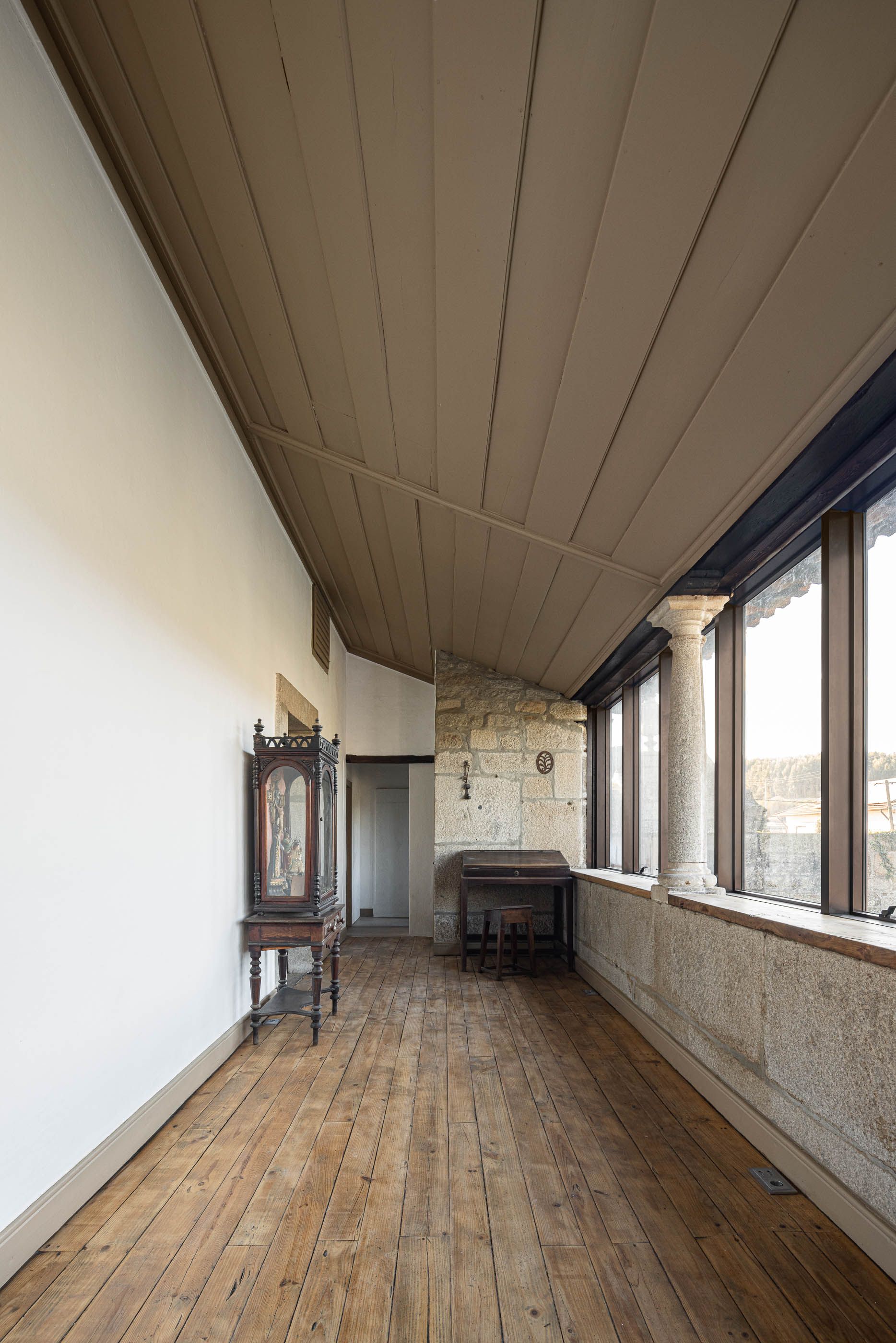
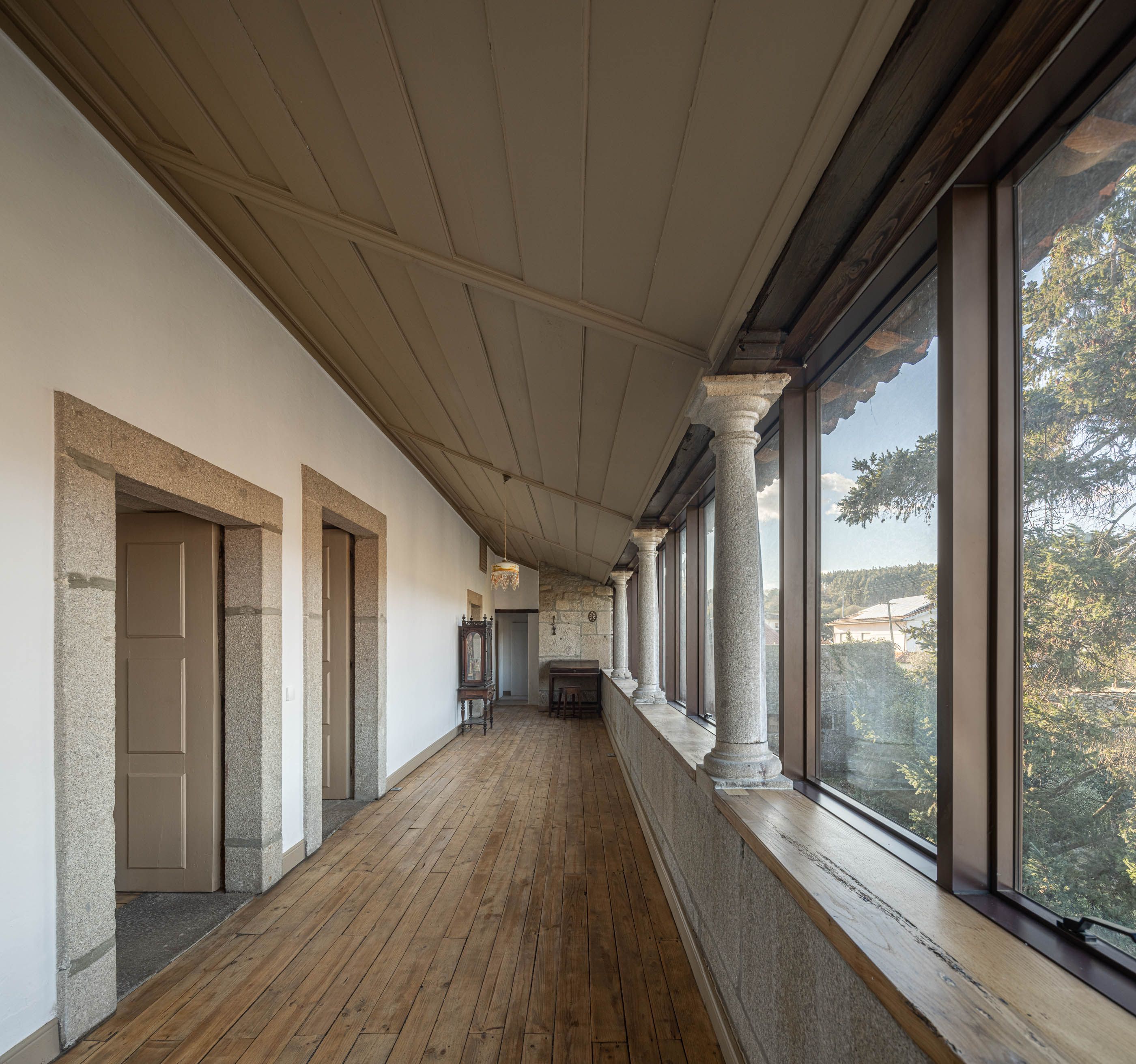
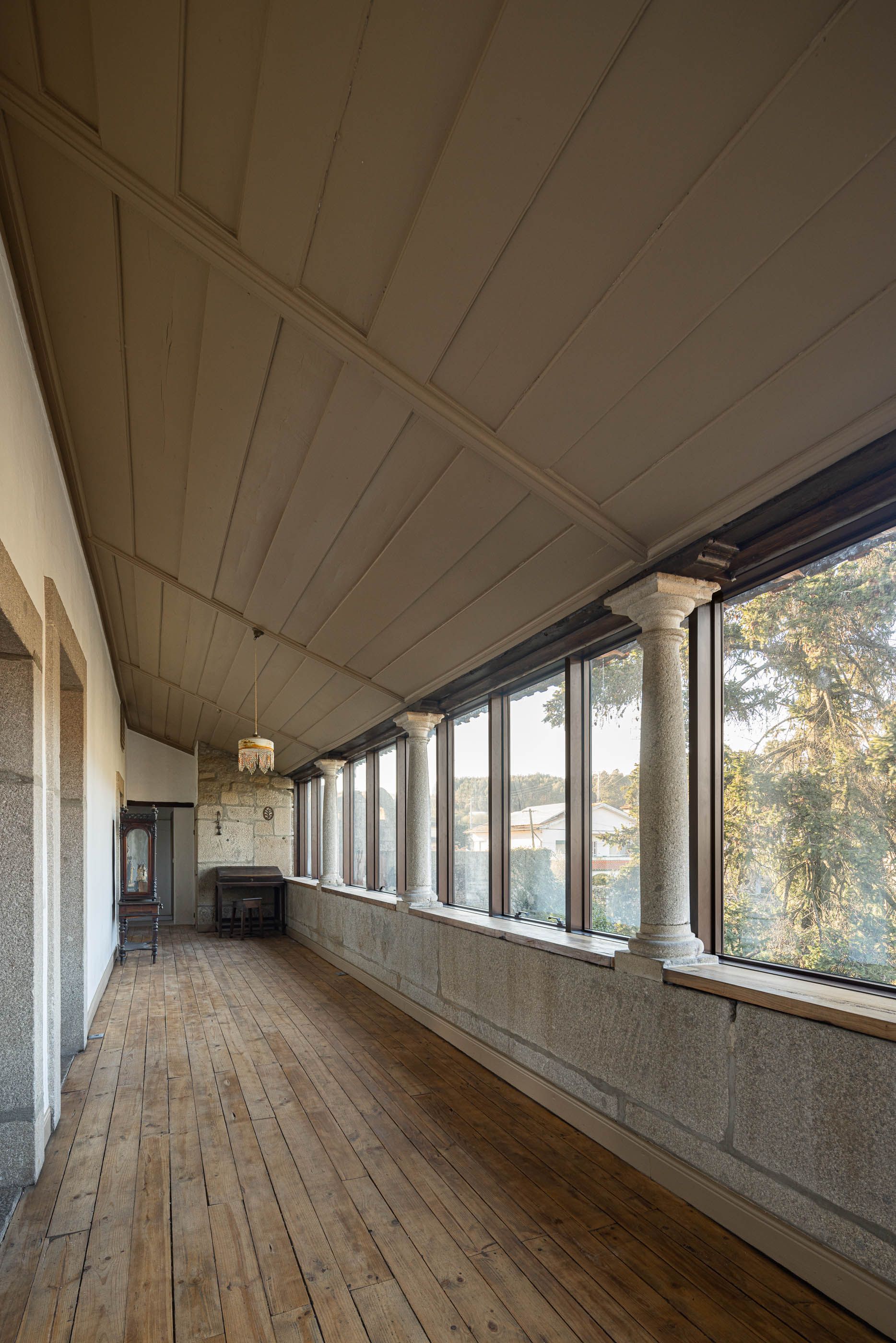
At the back of the house, on the east side, exposed to the place where, once upon a time, there was a large kitchen that should have served the house and certainly the farm workers, there is a balcony, so called by the owners, which was closed, in unknown period, with a partition wall. This wall, with some sash windows, made of inferior quality wood and quite deteriorated, partially covered the set of columns that support the roof. This circumstance dictated the complete removal of the partition wall and windows, freeing the granite columns and restoring the visual breadth of the balcony. Wall that was replaced by a large glass opening, keeping the balcony as a closed space, because in reality this was, for a long time, a space that could accommodate a vast number of that of pieces of furniture for different uses: two dining tables, a cupboard, several armchairs, shelves with books, a desk and an oratory.
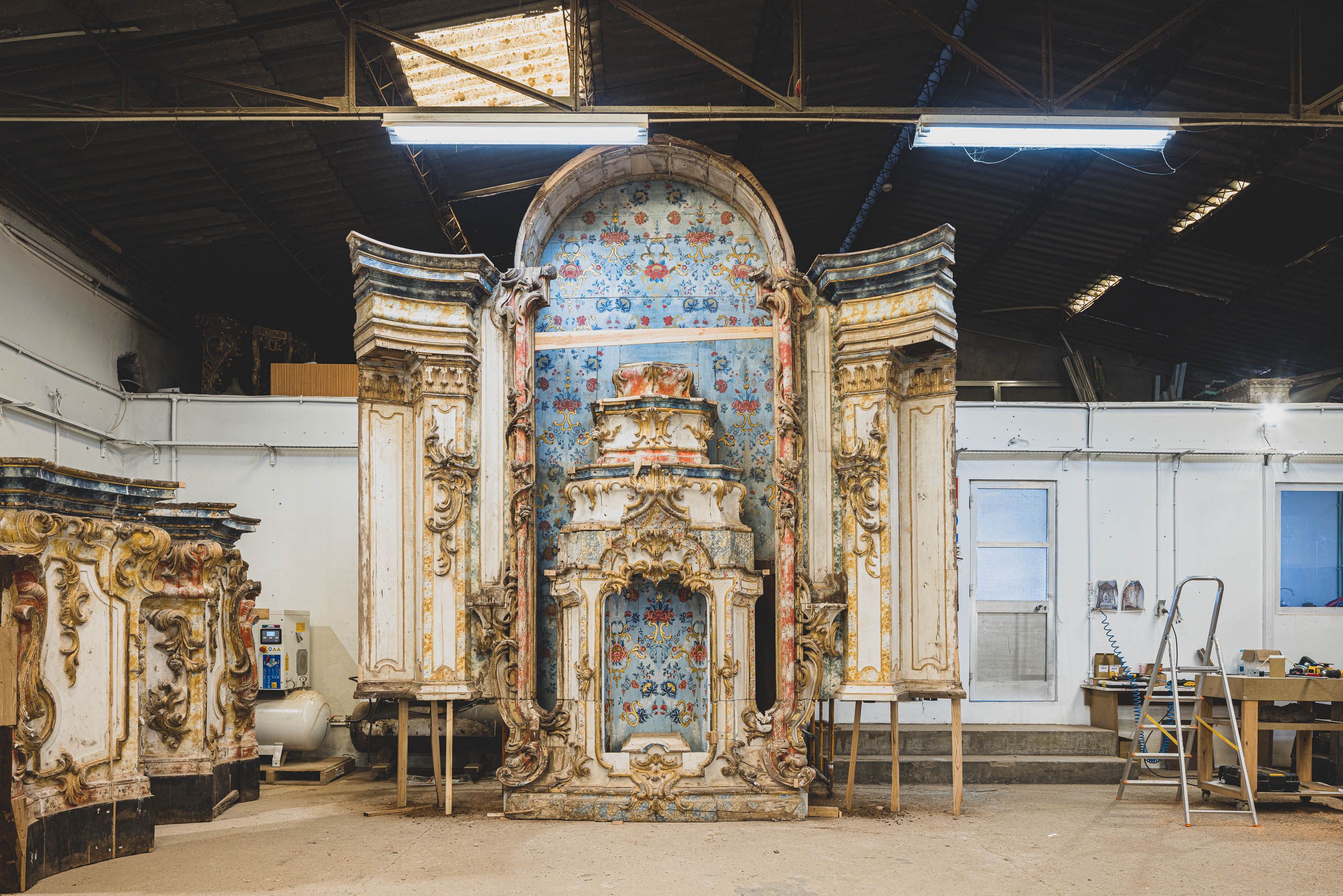
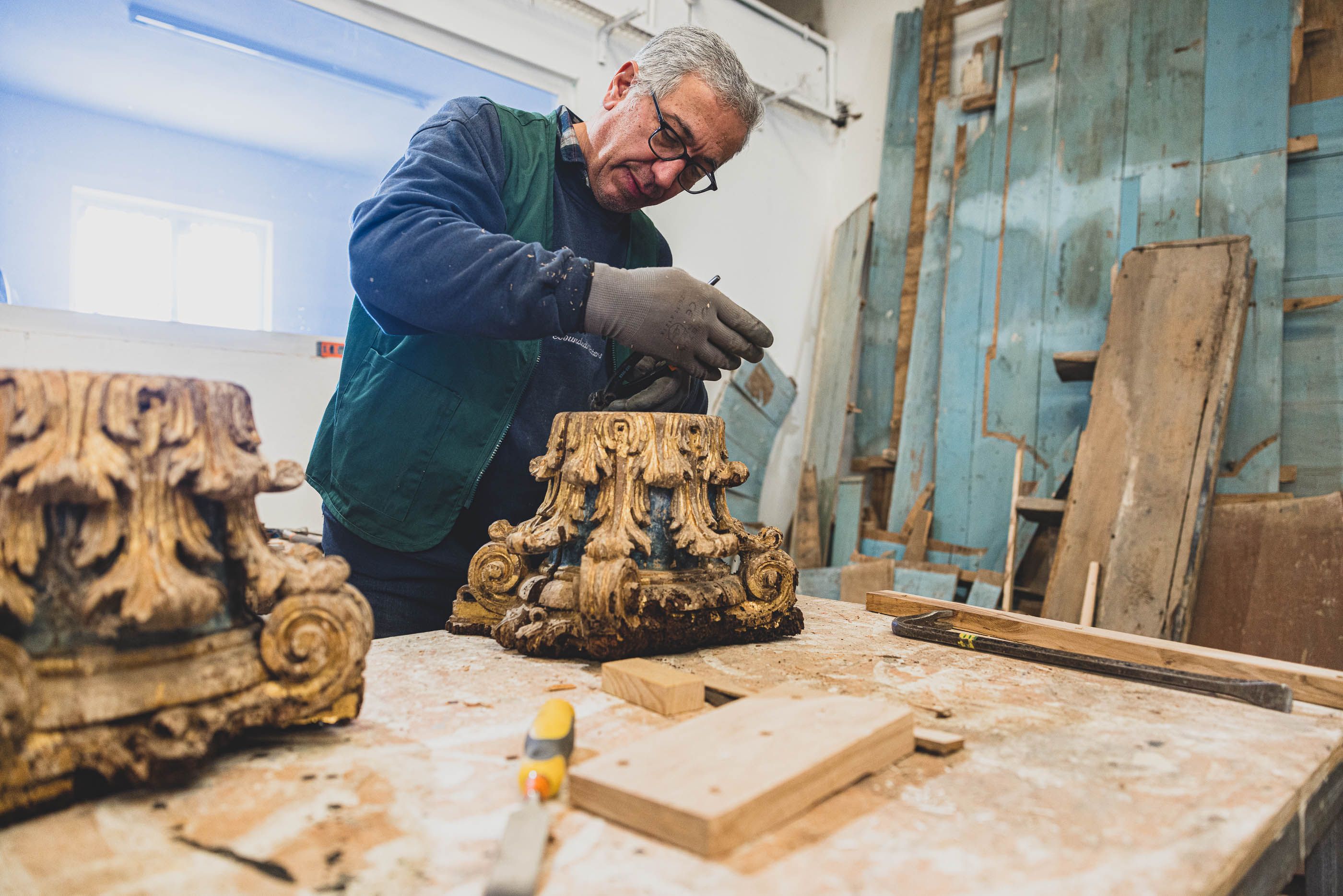
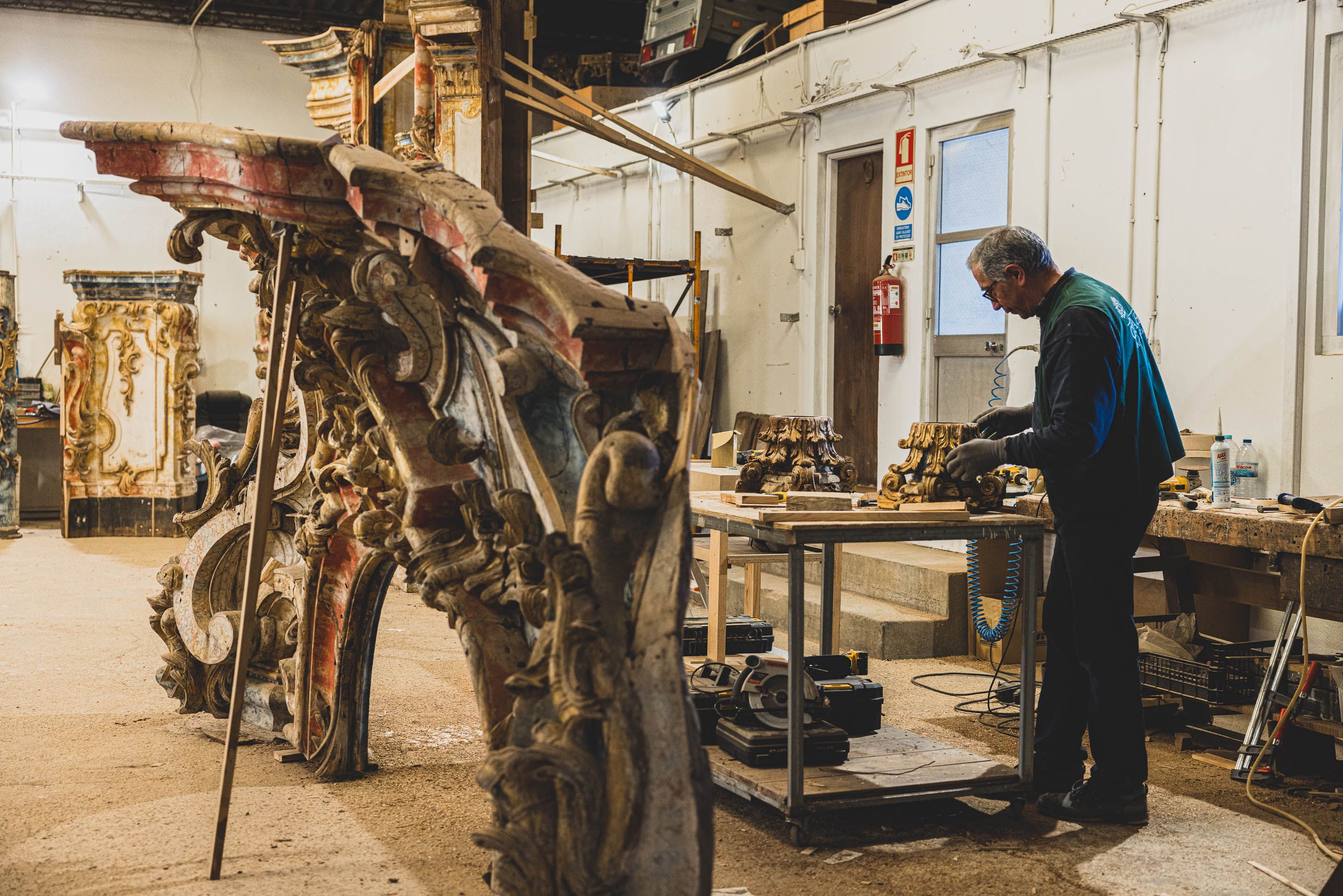
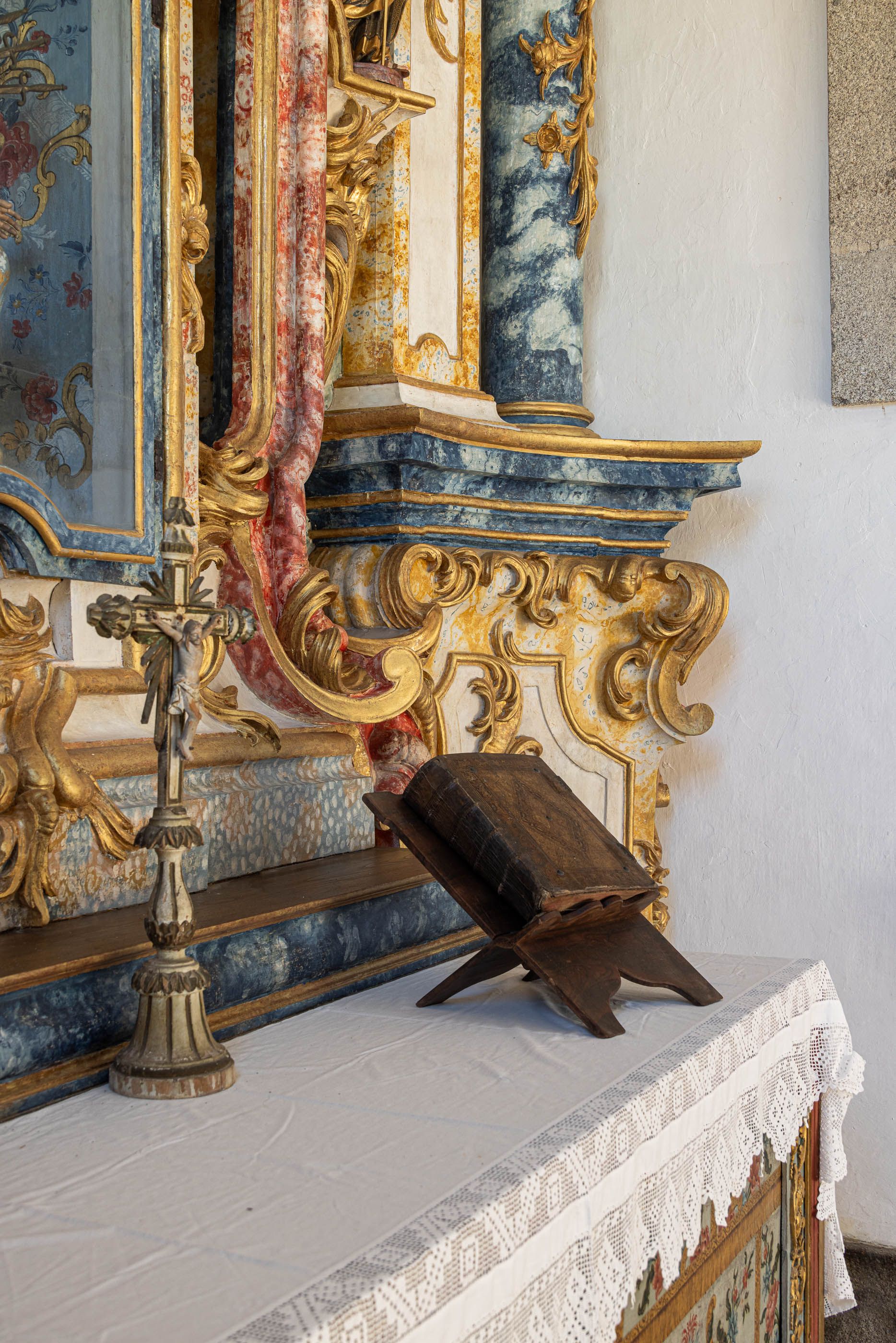
The main altar, described by historian António Martins Vieira¹, was completely restored, in an operation that began with a process of fixing the gold leaf and the polychromy that was highlighted, and then proceeded to dismantle the entire altarpiece and its transport to the restorer's workshop/atelier, where the remaining treatments continued. Initially, a disinfestation was carried out, for subsequent consolidation of the woody support, with structural reinforcement of the entire altarpiece, which consisted of reviewing the connections and fittings, realigning some parts and filling cracks, fissures and gaps with wood.
Finally, the polychromy and gold leaf were cleaned over the entire surface of the altarpiece and a plaster-based putty was applied to the gaps, later integrated with pigments.
Once the intervention in the studio was completed, the altarpiece was assembled in its original location. ²
The rehabilitation work has not yet been completed, with plans to renovate the ground floor in the medium term and transform it into a work space and library, as well as the application of thermal plaster to the facades of the house and the chapel.
1 – Vieira, A. M. (2000) The Chapels in the Municipality of Vila Nova de Famalicão. C. M. V. N. de Famalicão.
Other sources: https://bit.ly/3nhV9d2 and https://bit.ly/381hXr1 in 2020
2 – technical description provided by the person responsible for the restoration
- Architecture: Paulo Seco
- Collaboration: Filipe Lourenço
- Location: Famalicão
- Project: 2021
- Construction: 2023
- Image Copyright: ITS Ivo Tavares Studio